
29 July 2026
Commercial Resin Surfacing In Bournemouth: Car Parks, Paths & Premises
Most people know resin as a driveway surface, but a large share of the resin we lay across the Bournemouth area is commercial - car parks, business forecourts, care home entrances, school paths, retail courtyards and public access routes. It is a different job to a domestic driveway in a few important ways, and if you are a business owner, facilities manager, developer or landlord weighing up surfacing options, those differences matter.
Here is what commercial resin surfacing involves in Bournemouth, where it works well, and the things worth knowing before you specify it for a commercial site.
Where Commercial Resin Surfacing Works
Resin bound surfacing suits a wide range of commercial applications, and the same core material does most of them - specified up or down to the job.
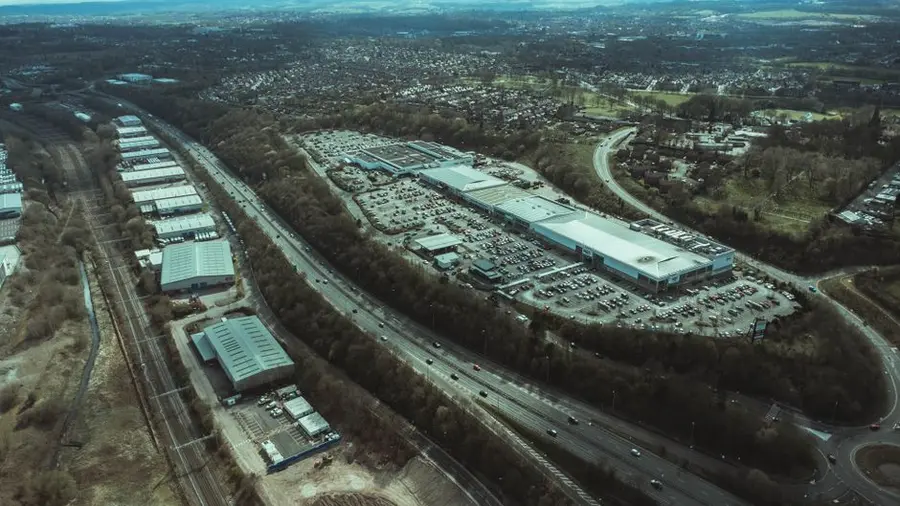
Car parks are the most common. Office and retail car parks, hotel forecourts, and pub and restaurant frontages all benefit from a surface that looks smart, drains freely and does not develop the potholes and edge failures that plague tarmac. Access roads and service routes take heavier loading and are specified accordingly. Footpaths, courtyards and public realm areas - the kind of pedestrian spaces around Bournemouth’s town centre, university buildings and seafront developments - use resin for its smooth, accessible, low-glare finish.
It also does the smaller commercial jobs well: care home and surgery entrances where a flat, non-trip surface matters, school and nursery paths, and the shared parking and access areas that landlords and management companies are responsible for. Our resin paving page covers the larger-area applications in more detail.
Built For Traffic: The Commercial Specification
The single biggest difference between a domestic driveway and a commercial surface is what happens underneath, because commercial traffic is heavier and more constant.

A domestic driveway is built to carry family cars. A commercial car park or access road may take delivery vans, refuse vehicles, or a steady stream of traffic all day, so the engineering is uprated. That usually means a deeper, stronger sub-base, a larger and harder-wearing aggregate, and a higher-strength resin system designed for the expected loading. The build-up is designed to the use, not lifted from a domestic spec.
Getting this right is exactly why a commercial job needs a proper survey rather than a per-metre rate over the phone. The loading, the existing ground, the drainage strategy and the access all feed into the specification. A surface built to the wrong spec fails early, and on a commercial site that means disruption and cost you did not budget for. Our post on what goes under a resin driveway explains the sub-base principles that apply here, scaled up.
SuDS And Drainage On Commercial Sites
Drainage is where resin has a real regulatory advantage on commercial work, and it is often the deciding factor.

Most new and redeveloped commercial sites have to manage surface water under Sustainable Drainage Systems (SuDS) requirements, dealing with rainfall on site rather than dumping it into the drainage network. Permeable surfacing is one of the recognised ways to do that, and resin bound is permeable - water drains through it into a designed sub-base rather than running off. On the flat, low-lying ground common across parts of Poole and Bournemouth, where surface water has nowhere obvious to go, that matters.
For resin to count toward a SuDS strategy, the sub-base has to be engineered as a permeable, water-holding layer, sometimes with attenuation built in. This is a design question we handle at survey stage, and it is worth involving the surfacing contractor early - retrofitting drainage after the fact is far more expensive than designing it in. The government’s SuDS standards{target=“_blank” rel=“noopener noreferrer”} set out what a compliant scheme needs to achieve.
Accessibility And Public Realm
For any commercial site the public uses, the surface has to work for everyone who crosses it, and this is a genuine strength of resin.
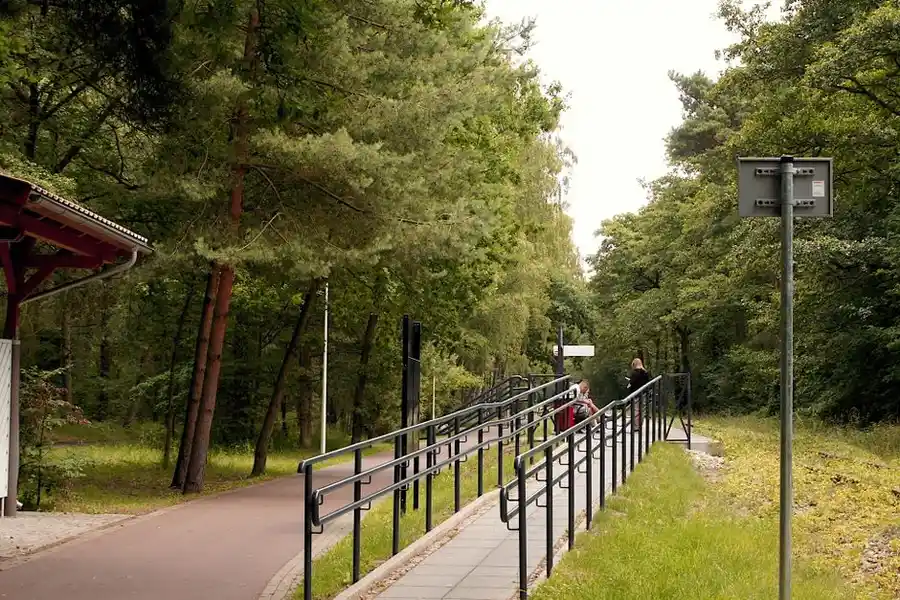
The finish is smooth, firm and joint-free, with no loose stone, no raised block edges and no sunken slabs to catch a wheelchair, walking frame or pushchair. That makes it well suited to care homes, medical practices, schools and any premises with a duty to provide accessible access. The textured natural stone still grips underfoot in the wet, which matters on the coast, and the matt finish avoids the glare of some sealed surfaces.
There is an appearance benefit too. Resin gives a commercial frontage a clean, contemporary look in a colour chosen to suit the branding or the building, rather than the utilitarian black of tarmac. For customer-facing premises - hotels, retail, hospitality along the Bournemouth and Poole seafront and town centres - that first impression is worth something.
Planning The Works Around Your Operation
The practical worry with any commercial surfacing job is disruption, because most commercial sites cannot simply close for a week.
Resin installs relatively quickly once the base is prepared, and it can usually be phased so part of a car park or access route stays open while another is worked on. For a site that genuinely cannot close - a working care home entrance, a school gate, a busy car park - the phasing and timing are scoped at survey stage, and works can be sequenced around opening hours, term dates or quieter periods. Curing takes 24-48 hours before the surface is trafficked, which is planned into the programme.
We handle this as part of the quote rather than as an afterthought, because on commercial work the logistics matter as much as the surfacing itself. Getting the phasing wrong costs a business far more in lost operation than the surfacing does.
Getting A Commercial Quote
Commercial resin surfacing is not something to price from a photo or a rough area. The specification depends on the loading, the ground, the drainage strategy and the access, and getting any of those wrong shows up later as a failed surface or a blown budget.
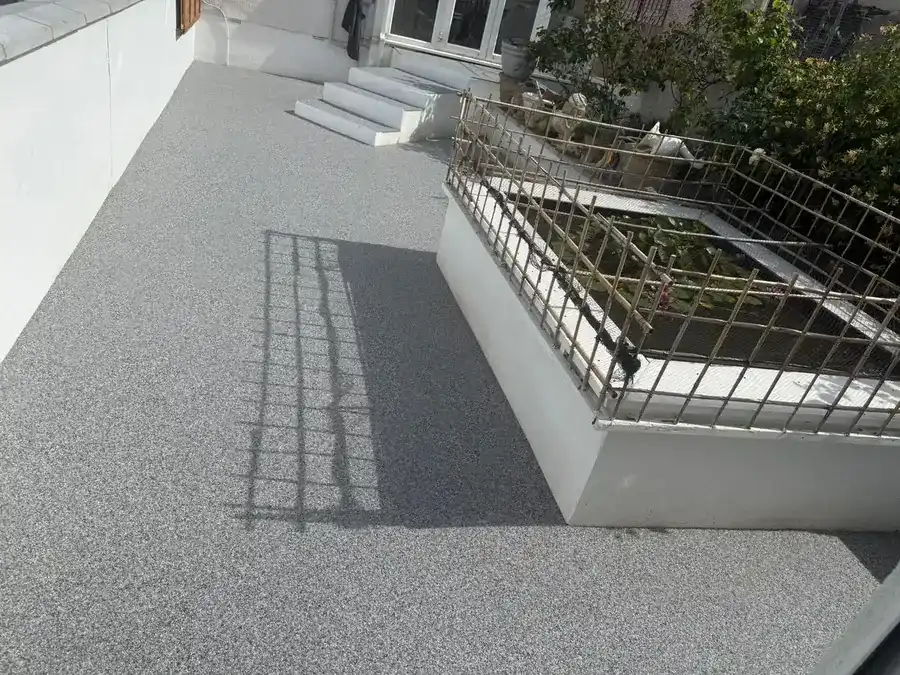
A commercial survey looks at all of it: the traffic the surface will carry, what is under the existing ground, how the site drains and whether SuDS applies, access for plant and materials, and how the works can be phased around your operation. From that we produce a fully itemised, fixed-price quote so you know exactly what is being built and why.
If you are responsible for a car park, forecourt, access route or public path in the Bournemouth area and want it surfaced properly, get in touch to arrange a free commercial site survey.
Frequently Asked Questions
Is resin bound surfacing suitable for commercial use?
Yes. Resin bound surfacing is widely used commercially for car parks, business forecourts, access roads, footpaths, courtyards and public realm areas. Laid at the right depth on a properly engineered sub-base, it carries regular vehicle traffic and heavy footfall. It is permeable, so it helps meet SuDS drainage requirements on commercial sites, and its smooth, joint-free finish suits accessibility and wheelchair access. For heavier-duty applications the specification is uprated - a deeper sub-base, a larger aggregate and a higher-strength resin - which a commercial installer will design to the expected loading.
How long does commercial resin surfacing last?
A correctly specified and installed commercial resin surface should last 15-25 years depending on traffic loading. Car parks and access roads take more punishment than a domestic driveway, so the sub-base depth and resin specification are increased accordingly. The permeable, joint-free surface has no block joints to spread and no sand to wash out, which keeps long-term maintenance costs lower than block paving over the life of the surface. Regular sweeping and occasional washing are usually all that is needed.
Does commercial resin surfacing help with SuDS compliance?
Yes. Sustainable Drainage Systems (SuDS) requirements apply to most new and redeveloped commercial sites, and permeable surfacing is one of the recognised ways to manage surface water at source. Resin bound surfacing is permeable - water drains through it into the sub-base rather than running off - which reduces surface water discharge and can form part of a SuDS strategy. The sub-base has to be designed as a permeable, water-holding layer for this to work, which is part of what we specify at survey stage.
How much does commercial resin surfacing cost?
Commercial resin surfacing is priced per square metre and varies with area, sub-base requirements, traffic loading and site access, so a firm figure needs a site survey. Larger commercial areas often achieve a lower per-square-metre rate than small domestic jobs because of economies of scale, but heavier-duty specifications add cost. The value case is usually in the whole-life cost - lower maintenance and a long lifespan - rather than the lowest upfront price. We provide fully itemised commercial quotes after surveying the site.
Can you install commercial resin surfacing with minimal disruption?
Yes, and on commercial sites we plan the works around your operation. Resin can often be laid in phases so part of a car park or access route stays open, and installation is relatively quick once the base is prepared. Curing takes 24-48 hours before trafficking. For sites that cannot close - a working car park, a care home entrance, a school - we scope the phasing and timing at survey stage so the disruption to staff, customers or residents is kept to a minimum.