
23 June 2026
How Much Does A Resin Pathway Cost In Bournemouth?
Resin pathways tend to be the last thing people think about when they’re improving their property - the driveway or patio gets done first, and the path gets left with the same cracked slabs or worn concrete it’s had for years. But a good resin pathway makes a noticeable difference to how a property looks and feels, and the cost is usually a lot more reasonable than people expect.
This guide covers what a resin pathway typically costs in Bournemouth, what drives the price up or down, and what questions to ask when you’re getting quotes.
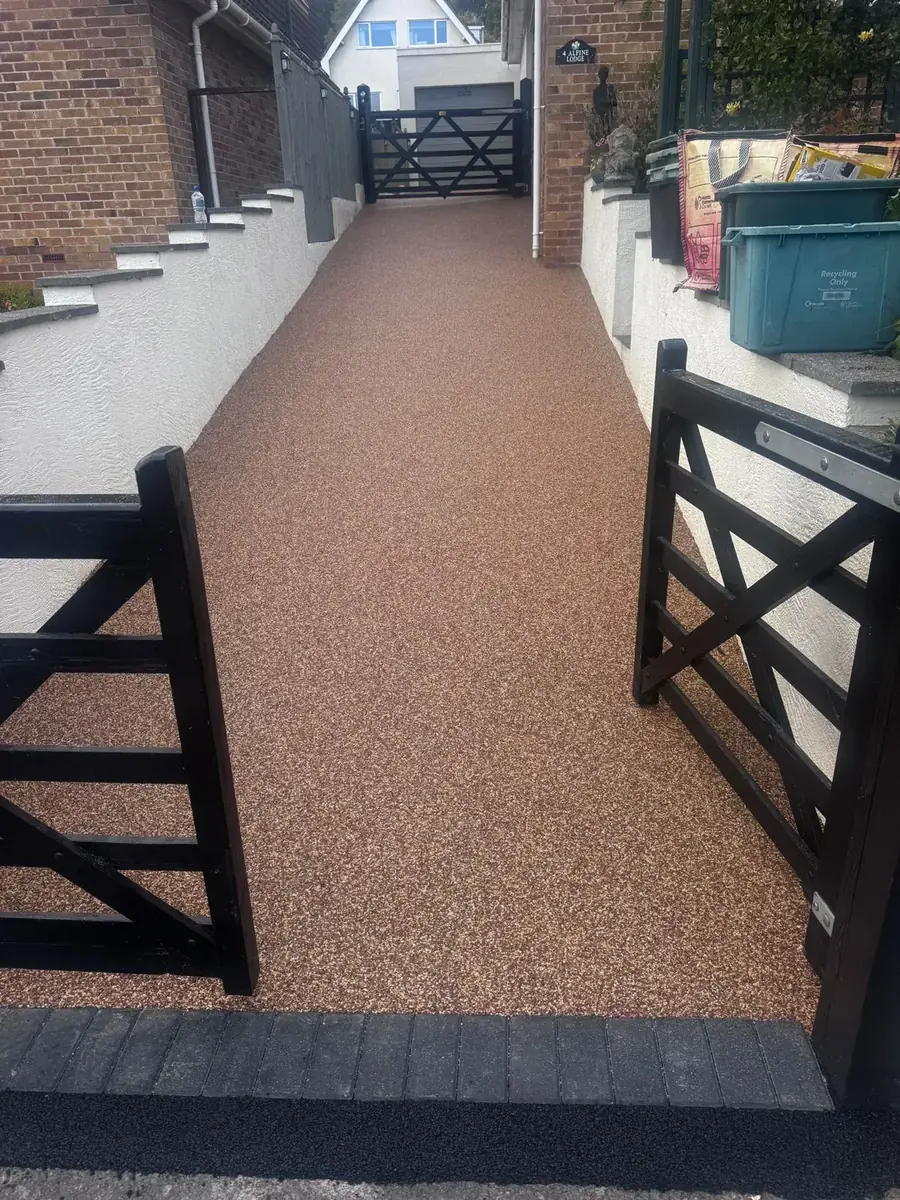
What Does A Resin Pathway Cost In Bournemouth?
Resin bound surfacing typically costs in the region of £100-£300 per square metre installed, which puts most residential pathway projects in Bournemouth somewhere between £500 and £5,000 in total. The range is wide because the size and complexity of pathway projects varies enormously - a short front approach path from a gate to a front door is a very different job to a long garden path that runs the full length of a Victorian semi in Southbourne.
As a rough guide based on typical projects in Bournemouth and Poole:
- A short front approach path (5-10 m²) typically costs £500-£1,200
- A standard garden or side access path (15-25 m²) typically costs £1,500-£3,500
- A longer path running across a larger garden or connecting multiple areas (30-50 m²) typically costs £3,000-£6,000
These are indicative ranges only. The only way to get an accurate price is a site visit, which any reputable installer should offer for free. See our resin pathways page for more on what’s involved, or get in touch to arrange a free site visit across Bournemouth, Poole and the surrounding Dorset area.
What Affects The Price Of A Resin Pathway?
The size of the area is the biggest driver of total cost, but a few other things can shift the price considerably.
The existing base condition is probably the most variable factor. If your existing path is sound concrete or stable slabs, resin can often be laid directly on top, saving the cost of lifting and disposing of the old material. If the base is cracked, sunken or failing, it needs to come out and a new permeable sub-base needs to go in - which adds excavation, disposal and material costs. We see a lot of Bournemouth paths where the original concrete has been undermined by tree roots, particularly on the older roads around Winton, Moordown and Charminster where mature hedges and boundary trees are common. If an installer quotes on overlaying a failed base without properly inspecting it first, they’re either not looking or cutting corners.
Width matters more than people realise. Going from a 0.9m path to a 1.2m path might not sound significant, but it’s a 33% increase in area - and material and labour go up accordingly. Side access routes that need to fit wheelie bins comfortably usually need at least 1.0-1.2m. A decorative garden path can get away with 0.6-0.9m.
The aggregate blend can also nudge the price. Most standard colours - buff, grey, charcoal, brown - are similarly priced. Premium or imported blends cost more, as do multi-colour feature designs. The difference is usually modest, but worth checking if budget is tight.
Resin Pathways vs The Alternatives
A lot of Bournemouth homeowners compare resin against gravel, block paving, or slab replacement when they’re thinking about a new path. If you’re also looking at the driveway at the same time, it’s worth reading our full resin vs block paving comparison - the same principles apply to paths.
Gravel is cheaper upfront - you can get a gravel path laid for £30-£60 per m² in many cases - but it comes with significant ongoing annoyance. Loose stones scatter onto lawns and planting beds, weeds establish through it readily, it shifts underfoot and becomes uneven, and it’s miserable to walk on in stiletto heels or with a pushchair. After five years, the total cost of a gravel path (including weed control, top-ups and the general hassle of it) starts to look a lot closer to what resin would have cost at the outset.
Block paving is a more direct comparison in terms of quality and longevity. The upfront cost per square metre is broadly similar to resin for a mid-spec block. The difference is in what happens over the years - block paved paths need the joints re-sanded periodically, weeds grow through the joints and need treatment, and individual blocks can sink or crack as the underlying sand shifts. Resin has no joints, so none of those problems apply. On shaded paths that don’t get much direct sun - common on north-facing gardens and side accesses in Bournemouth’s terraced streets - block paving also goes green and slippery with algae growth. Resin’s textured aggregate surface handles this much better.
Paving slabs are similar to blocks in most respects. They’re often cheaper initially, look acceptable for the first few years, and then slowly sink, crack and go mossy as the mortar fails. Relaying sunken slabs is tedious work and the cost adds up quickly.
What To Watch Out For When Getting Quotes
The resin driveway and pathway market has a wide range of installers, and the variation in quote prices can be significant. Some things worth understanding before you sign anything:
The sub-base specification matters. A resin path laid at the correct depth over a properly prepared base will last 20 years. The same resin laid thinly over an inadequate base might start showing problems within a few years. When you get quotes, ask specifically what depth of resin they’re proposing and what they’ll do with the existing base. If they’re quoting an overlay without having properly inspected the existing surface, that’s a flag.
UV stability is particularly relevant in Bournemouth. The south coast gets more direct sun than most of the UK, and cheaper resins yellow, fade and become brittle under sustained UV exposure. Ask what resin system they use and whether it carries a UV stability specification. A good installer will be able to tell you.
References or photos of previous work are worth asking for. Most established local installers will have photos from recent Bournemouth or Dorset projects and will be comfortable showing them. Anyone who hedges on this is worth being cautious about.
How To Get An Accurate Quote
The only real way to price a pathway is to look at it. Dimensions, base condition, access, soil type, drainage requirements and aggregate choice all affect cost and can’t be assessed over the phone or by email.
We carry out free site visits across Bournemouth, Poole and the surrounding area - including Christchurch, Wimborne, Ferndown, Ringwood and further into Dorset. There’s no obligation to proceed after a visit, and the quote is written and itemised so you can see exactly what’s included.
Around a third of the pathway quotes we carry out in Bournemouth end up being combination projects - the customer started by asking about a path and then decided to do the patio or driveway at the same time, since the mobilisation cost is spread across a larger area and the overall price per square metre comes down.
Frequently Asked Questions
How much does a resin pathway cost in Bournemouth?
Most residential resin pathways in Bournemouth cost between £500 and £5,000 depending on the length and width, the condition of the existing surface, and whether groundwork is needed. Short front approach paths at 5-10m² typically start from around £500-£800. Longer garden paths or wider side access routes can reach £2,000-£4,000 for 20-40m².
Is resin cheaper than block paving for a pathway?
The upfront cost per square metre is broadly similar. Where resin wins over time is maintenance - block paved paths need re-sanding every few years, weed treatment through the joints, and occasional block replacement where subsidence occurs. Resin has none of those ongoing costs, which makes it cheaper over a 10-15 year period in most cases.
Do I need planning permission for a resin pathway in Bournemouth?
No. Garden pathways do not require planning permission under permitted development rules. The SuDS drainage requirements that apply to front driveways do not apply to garden paths in the same way. If your property is listed or within a conservation area, check with BCP Council before any hard landscaping work, but for a standard residential path this is not an issue.
How long does a resin pathway take to install?
Most residential pathway projects in Bournemouth - including a front approach path or garden path up to around 30-40 square metres - can be completed in a single day once the base is prepared. The surface is ready for foot traffic within a few hours of laying.