
8 August 2026
Are Resin Driveways Good For Wheelchair & Accessible Access?
Bournemouth and Poole have an older population than most of the country, and a lot of people planning driveway or garden work are thinking ahead - about staying in the family home comfortably, about a relative who uses a wheelchair or frame, or about a care or retirement setting that has to work for everyone. The surface underfoot matters more than people realise for all of that, and it is a question we get asked a lot: is resin any good for accessible access?
The answer is that resin is one of the best surfaces you can choose for mobility, and for some good, specific reasons. Here is how it helps, and what to think about if accessibility is a priority.
Are Resin Driveways Good For Accessibility?
Yes, and it is not a close call. Resin bound surfacing ticks the boxes that matter most for accessible access better than almost any alternative.
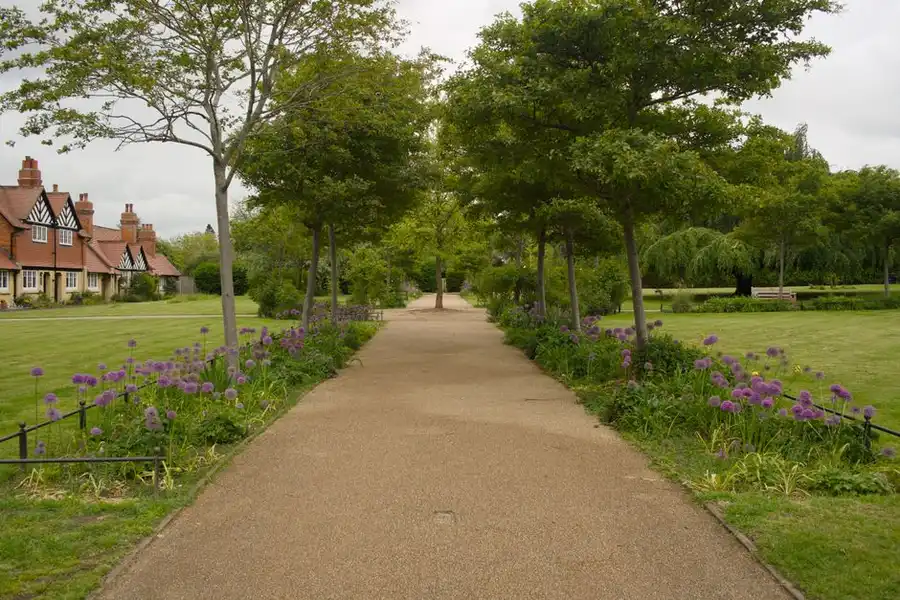
What a wheelchair, frame or scooter needs is a surface that is flat, firm, continuous and grippy - and resin is all four. It is smooth with no loose stone to sink into, firm so wheels do not drag, continuous with no joints or slab edges to catch, and textured enough to grip in the wet. A resin bound surface also lets you run one flat finish from the pavement to the front door, or from the back door across a patio, without the changes of surface that trip people up.
The rest of this post breaks down why it works so well, but that combination - flat, firm, continuous, grippy - is the whole reason resin suits accessibility. Not many surfaces manage all four at once.
A Smooth, Firm, Trip-Free Surface
The single biggest thing resin does for mobility is remove the things that catch and trip.

A resin surface has no joints, no raised slab edges, no sunken sections where the bedding has washed out, and no loose stone. That means nothing for a small castor to catch on, nothing for a walking-frame foot to snag, and nothing to work loose and shift underfoot. It is a genuinely continuous surface, which is exactly what a wheelchair or scooter needs to roll smoothly.
Compare that to what it usually replaces. Old slab paths develop lips and rocking slabs as they age. Block paving, even when new, has joints and a slightly uneven surface that can jar a wheelchair and catch small wheels. Both get worse over time. Resin stays flat and continuous for its full 20-year life, so the access does not slowly deteriorate the way a slab path does.
Grip Without The Slip
Smooth is only half the requirement. A surface also has to be safe when it is wet, which on the south coast is a lot of the time.
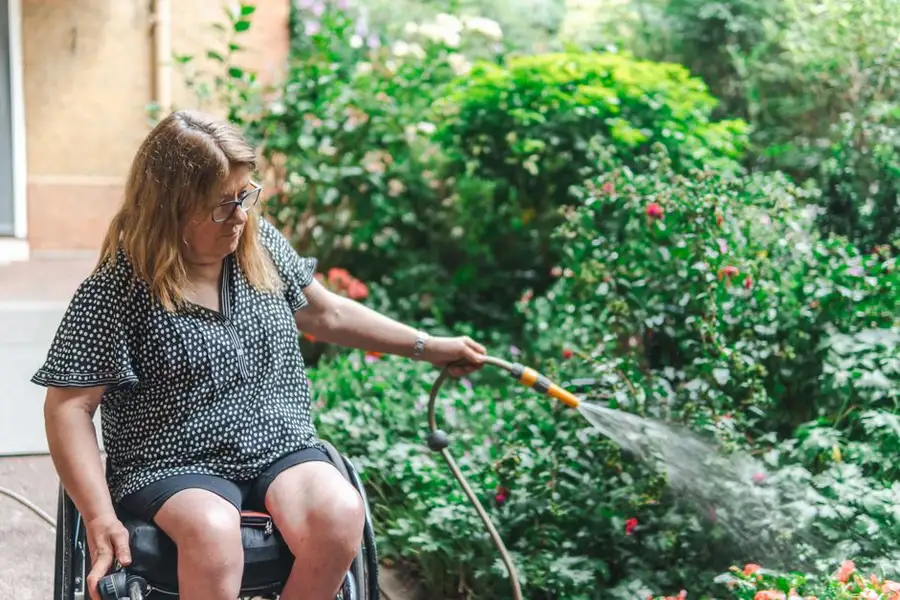
This is where resin quietly wins. The natural stone aggregate gives it a textured, grippy finish rather than a slick one, and because it is permeable, water drains straight through it instead of sitting on top as the film that makes flat slabs and sealed concrete slippery. So it is smooth to roll across but not slippery to walk on, which sounds like a contradiction and is exactly the combination you want for elderly or disabled users.
Where extra grip is wanted - on a ramp, or a sloped approach - a coarser aggregate or an anti-slip additive increases the traction further without changing the look much. Our post on whether resin driveways are slippery goes into the grip in more detail, but for accessibility the short version is that resin is one of the safer wet surfaces you can specify.
Level Access And Thresholds
For a wheelchair or scooter, a single step or a lip at the door can be the difference between independence and needing help. Resin is unusually good at removing them.
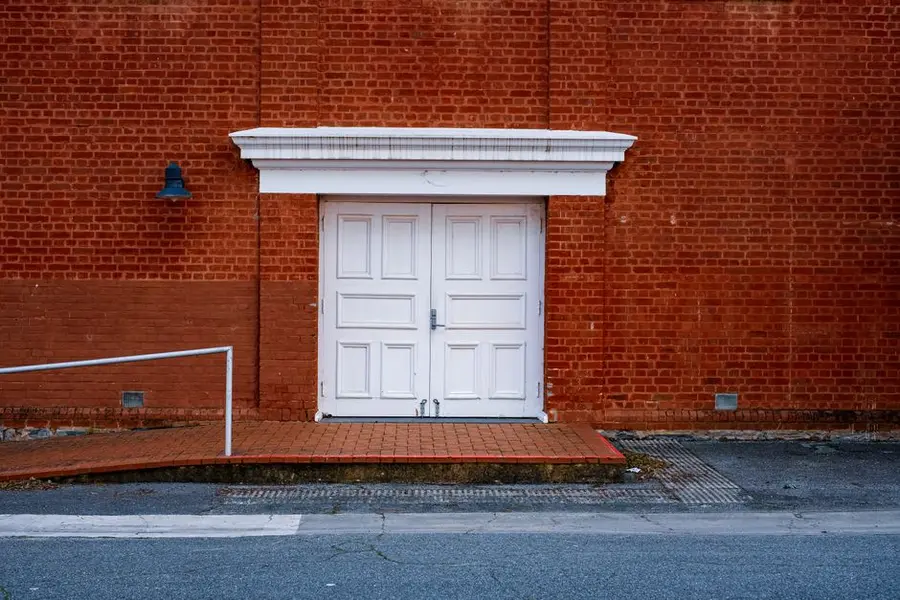
Because resin is trowelled by hand rather than laid in fixed units, it can be worked to precise levels. That means it can be brought up to a level threshold at a doorway to remove a step, and graded smoothly across a driveway or path so there are no abrupt changes in height. Where the old surface met the door with a lip or a drop, resin can be laid to meet it flush.
The levels are all set at the survey, because they have to balance two things: comfortable, gentle access, and correct drainage so water still runs away rather than toward the house. Getting both right is a design job, which is another reason accessible work is worth surveying properly rather than pricing blind.
Ramps And Gentle Slopes
Where a step genuinely has to become a slope, resin makes a good ramp surface.
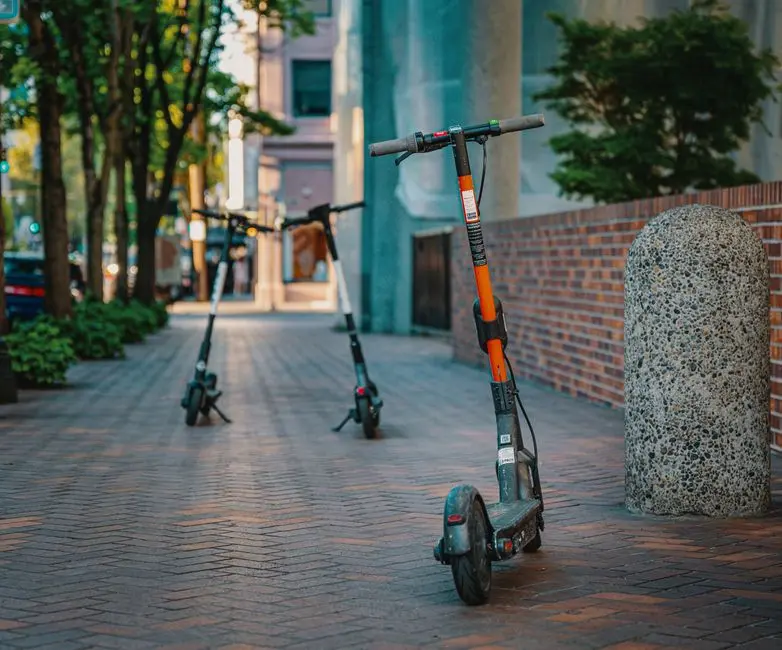
A resin ramp is continuous with the path or driveway it connects to - the same surface flows up the slope, so there is no change of material and no joint at top or bottom. The grip can be increased for the gradient, and the smooth, firm finish is easy for a wheelchair or scooter to climb. On the sloped and split-level plots common around Bournemouth’s hilly, cliffside streets, this is often how a garden or entrance is made accessible: a gentle resin ramp replacing a step, tied cleanly into the surrounding surface with no join.
Because resin follows curves and changing widths, a ramp can also be shaped to fit the space rather than forcing a straight run where there is no room for one. That flexibility helps on the tighter frontages of older Bournemouth properties.
Care Homes, Retirement Living And Aging In Place
All of this makes resin a strong choice not just for individual homes but for the settings that have to work for everyone.
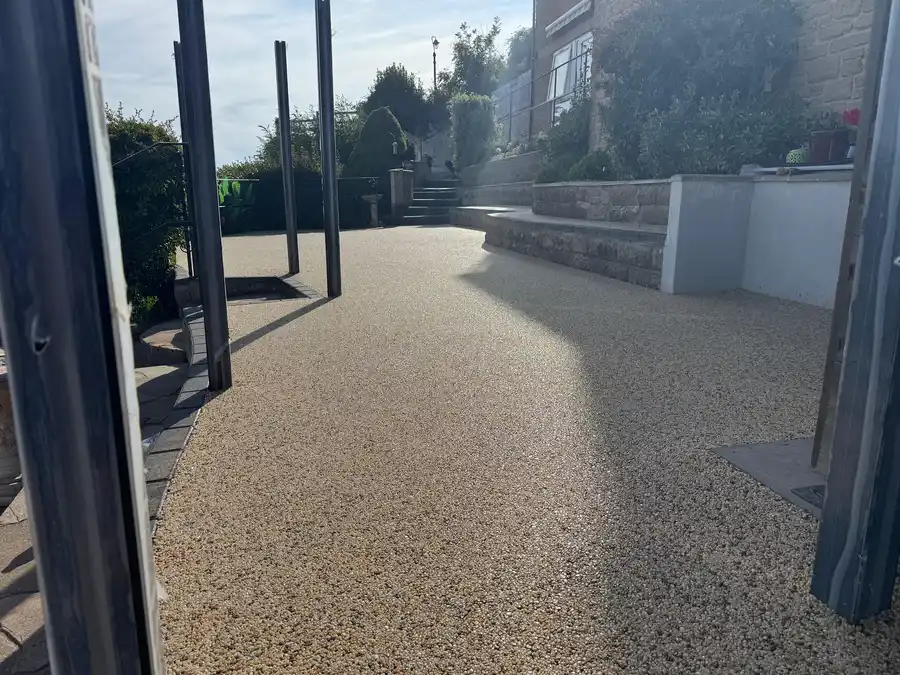
Care homes, retirement developments and sheltered housing have a duty to provide safe, accessible outdoor access, and resin delivers it: smooth, firm, slip-resistant, wheelchair-friendly, and free of the loose stone and trip hazards that other surfaces bring. It can be laid to level access and gentle ramps across a whole site, it drains freely so there is no standing water for residents to slip on, and it needs almost no maintenance - which matters for managed properties watching ongoing costs. We cover the larger-site side of this in our post on commercial resin surfacing.
For a family home, the same qualities are what make resin a sensible choice for aging in place - putting down a surface now that will still be safe and easy to use in twenty years, whatever mobility needs come along. If accessibility is a priority for your property or setting, book a free site visit and we will look at the levels, the thresholds and the grip, and design access that genuinely works.
Frequently Asked Questions
Are resin driveways good for wheelchair access?
Yes. Resin bound surfacing is one of the best surfaces for wheelchair access. It is smooth and firm with no loose stone, no joints and no raised slab edges, so wheels roll across it easily without sinking, dragging or catching. Unlike loose gravel, which is very hard to push a wheelchair through, or block paving, whose joints and slight unevenness can catch small castors, resin gives a continuous flat surface. It still grips underfoot because of the natural stone texture, so it is safe as well as smooth.
Is resin better than gravel or block paving for mobility?
For mobility, yes. Loose gravel is the worst surface for wheelchairs, walking frames and mobility scooters because the wheels sink and drag, and it is unstable underfoot. Block paving is firmer but its joints and slightly uneven surface can catch small wheels and castors. Resin bound surfacing is smooth, firm and continuous with nothing to catch or sink into, while the aggregate texture still provides grip. That combination of flat, firm and grippy is exactly what mobility aids need.
Can resin help create level access to a house?
Yes. Because resin is trowelled by hand, it can be laid to precise levels and falls, which helps create smooth, gentle transitions rather than steps or lips at thresholds and doorways. It can be laid up to a level threshold to remove a trip point, and used to form gentle ramps and gradients where a step needs to become a slope. The levels are set at the site survey so access is comfortable and water still drains correctly, which matters for anyone using a wheelchair, frame or scooter.
Is resin slip-resistant for elderly or disabled users?
Yes. The natural stone aggregate gives resin a textured, grippy finish rather than a smooth one, and because it is permeable it drains rather than holding the surface water that makes flat slabs slippery. For extra grip on a ramp or slope, a coarser aggregate or an anti-slip additive can be specified. This makes resin a safer choice than sealed concrete or wet slabs for elderly or disabled users, particularly in Bournemouth's damp coastal climate where surfaces are wet for much of the year.
Is resin suitable for care homes and retirement properties?
Yes. Resin bound surfacing is well suited to care homes, retirement developments and sheltered housing because it provides smooth, firm, slip-resistant, wheelchair-friendly access with no loose stone or trip hazards, and needs almost no maintenance. It can be laid to level access and gentle ramps, drains freely, and helps meet the accessibility expectations these settings have a duty to provide. Its low upkeep also suits managed properties where ongoing maintenance costs matter.