
18 July 2026
How Long Does It Take To Install A Resin Driveway?
Once someone has settled on resin, the next question is almost always about disruption: how long will my driveway be a building site? It is a fair thing to want to know, especially if you rely on off-street parking or you are trying to fit the work around other trades. The good news is that resin is one of the quicker driveway surfaces to install - most jobs are done inside a few days rather than a week or more.
Here is a realistic breakdown of how long a resin driveway actually takes in Bournemouth, what the days involve, and the things that can push a job past its estimate.
The Short Answer: One To Three Days
Most residential resin driveways in the Bournemouth area take between one and three days. The single biggest factor is whether the existing base can be kept or needs replacing.
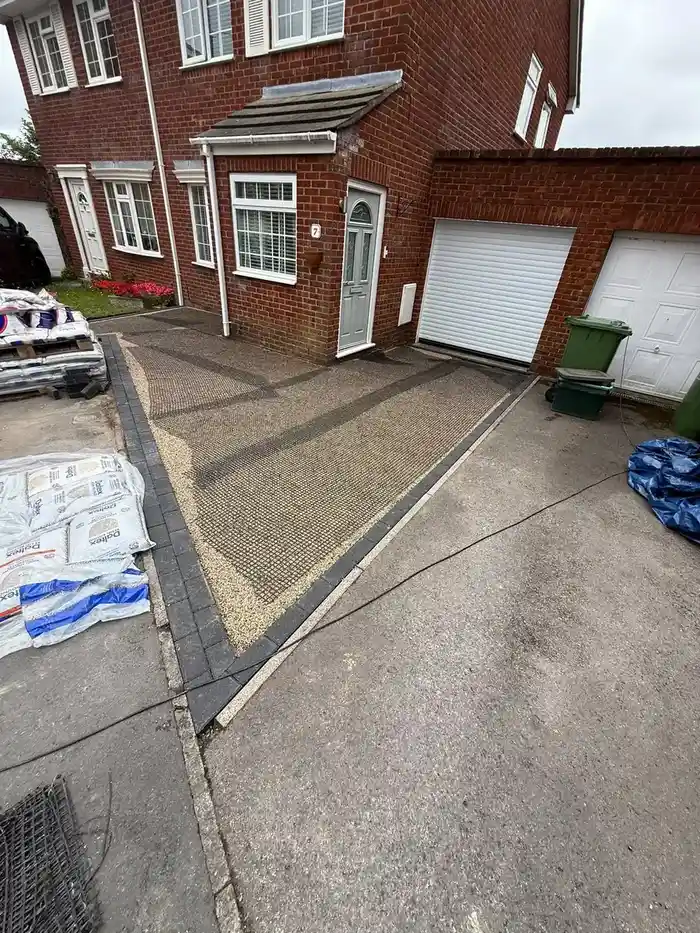
An overlay - laying resin bound surfacing over a sound existing concrete or tarmac base - can often be done in a single day. The surface is cleaned and primed in the morning, and the resin is trowelled the same afternoon.
A full installation takes longer, usually two to three days, because the groundwork and the resin are separate stages. The old surface has to come up, a new permeable sub-base has to go in and be compacted, and only then can the resin be laid. You cannot compress those into one day no matter how good the crew is. The base has to be right before anything goes on top of it, and rushing that is exactly how a driveway fails early.
Day By Day: What Actually Happens
It helps to see where the time goes, because “two to three days” covers a specific sequence rather than a vague stretch of work.
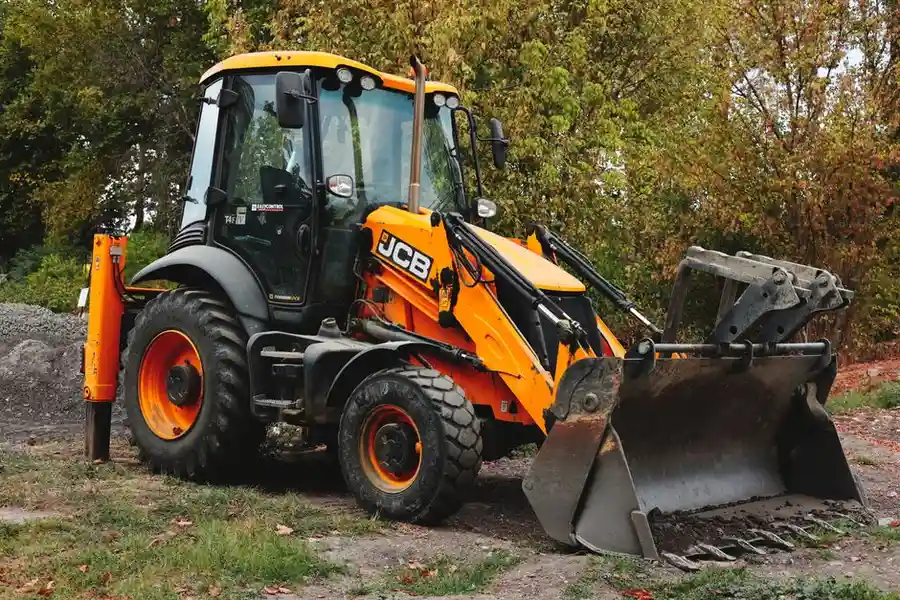
On a full installation, day one is groundwork. The existing driveway is dug out and removed, the ground is excavated to the right depth, and edge restraints go in. For most Bournemouth driveways on the sandy soils common across Poole and the north of the town, this is straightforward digging; on the clay-heavy ground around Wimborne or the river valleys it can take longer to reach firm ground.
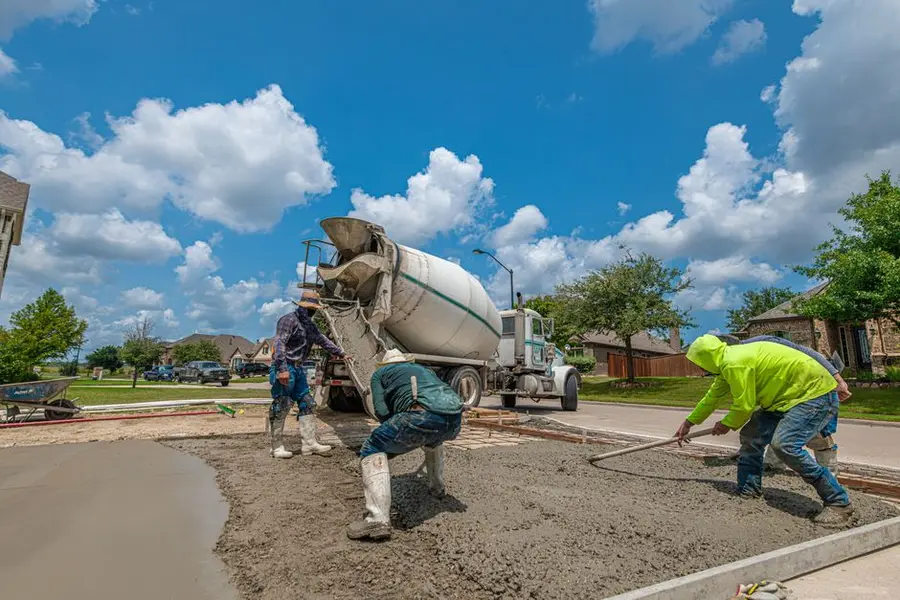
Day two is the sub-base. Permeable stone is laid, levelled to the correct falls for drainage, and compacted properly - this is the layer that decides whether the finished surface lasts 20 years or fails early, so it is not rushed.
The final day is the resin itself. The aggregate and UV-stable resin are weighed, forced-action mixed, and hand-trowelled across the whole driveway within the resin’s working window - usually a few hours for an average drive. On an overlay job, days one and two collapse into a morning of preparation, and the whole thing is finished the same day.
What Makes A Job Take Longer
Plenty of driveways come in right on estimate. When they run over, it is usually one of a handful of reasons.
The base is the big one. An installer quotes for an overlay expecting the concrete to be sound, then lifts a section and finds it cracked, hollow or sitting on nothing - and the job becomes a dig-out. This is exactly why a proper site visit matters before the quote, and why anyone pricing your driveway without seeing it is guessing at the timescale as much as the cost. Our guide to choosing a resin driveway installer covers what a good survey should check.
Size and complexity add time in obvious ways. A large driveway has more to excavate and trowel. Borders in a second colour, curved edges, a drainage channel or steps all add hours. Restricted access does too - if the mixer cannot get near the working area and every load of stone has to be barrowed down a narrow side, the labour stretches. That is common on the older terraced streets around Boscombe and Springbourne.
Weather And The Bournemouth Factor
Resin has one hard rule: it cannot go down in the wet. The base must be dry and it must stay dry while the resin cures, so rain during or shortly after laying will stop a job or ruin the finish.

This is where timings can slip through no fault of the crew. If rain rolls in off the Channel on the morning the resin was due to be laid, a good installer postpones rather than risks it - a surface laid in poor conditions can foam, cloud or fail to cure, and then it has to be lifted and redone. A day’s delay waiting for dry weather is far better than that.
The flip side is that Bournemouth’s climate is on your side more than most of the UK. The south coast gets some of the highest sunshine hours in the country and mild winters, so dry-weather windows are more frequent here than inland - one reason resin can be installed across most of the year locally, as covered in our post on the best time of year to lay a resin driveway.
Curing: When Can You Actually Use It
Installation time and usable time are two different things. The laying might finish on a Tuesday afternoon, but the driveway is not ready for the car straight away.
Resin cures by chemical reaction, and temperature drives the speed. As a rule, you can walk on the surface after around four to six hours, and drive on it after 24 to 48 hours. In a warm Bournemouth summer, the shorter end applies - often ready for vehicles the next morning. In cooler autumn or winter conditions, give it the full 48 hours to be safe. Heavy loads, skips or a caravan should wait a little longer again.
Your installer will give you the specific numbers on the day, because they depend on the actual temperature and the resin system used. The key point is to plan for a short gap between the job finishing and parking on it - don’t book the driveway to be laid the morning before you need to leave for the airport.
How To Keep Your Installation On Schedule
A few practical things help a job run to time.

Clear the driveway completely before the crew arrives - cars, bins, pots and anything stored on it. Make sure there is access for a small digger and a mixer if the quote assumes it. If you are having other work done - a new wall, drainage, a dropped kerb - sequence it so the groundwork happens before the resin, not after, because nobody wants to dig up a fresh surface.
Most of all, use an installer who gave you a timescale after seeing the job, not a number over the phone. A realistic two-to-three-day estimate you can rely on beats a one-day promise that unravels when the base turns out to need replacing. If you want an honest assessment of what your driveway involves and how long it will take, book a free site visit and we will walk you through it.
Frequently Asked Questions
How long does it take to install a resin driveway?
Most residential resin driveways in Bournemouth take one to three days to install. A straightforward overlay onto a sound existing base can be done in a day. A full installation that involves digging out the old surface and laying a new permeable sub-base usually takes two to three days, because the sub-base needs to be excavated, laid, compacted and left ready before the resin goes down. The resin itself is laid in a single day once the base is prepared.
Can a resin driveway be laid in one day?
Yes, if the existing base is sound and being overlaid rather than replaced. In that case the surface is cleaned and prepared in the morning and the resin is trowelled the same day. A full dig-out with a new sub-base cannot be done in one day, because the groundwork and the resin laying are separate stages - the base has to be prepared and ready before resin can be mixed and laid over it.
How long before you can walk or drive on a new resin driveway?
You can usually walk on a resin driveway around 4 to 6 hours after it is laid, and drive on it after 24 to 48 hours. Curing is faster in warm weather and slower when it is cold, so a summer installation in Bournemouth is often ready for vehicles the next day, while a cooler autumn or winter job may need the full 48 hours. Your installer will give you exact timings based on the conditions on the day.
What can delay a resin driveway installation?
The most common delays are weather (resin cannot be laid in the rain or onto a wet base), discovering the existing base is worse than expected once work starts, restricted access that slows down moving materials, and larger or more complex driveways with borders, curves or drainage channels. A good installer builds a realistic timescale into the quote after a site visit rather than promising a fixed day without seeing the job.
Does the size of the driveway change how long it takes?
Yes. A small single driveway of 20-30m² on a sound base can be an overlay done in a day. A large driveway of 60m² or more, or one needing a full new sub-base, takes longer simply because there is more to excavate, more sub-base to lay and compact, and more area to trowel within the resin's working time. Most domestic jobs still fall within the one-to-three-day range regardless of size.