
5 August 2026
Resin Bound Garden Paths & Steps: Ideas For Bournemouth Homes
Driveways get all the attention, but the paths and steps around a house do just as much for how it looks and how easy it is to live in - and they are where a lot of gardens quietly fall apart. Cracked slab paths, wobbly steps, weeds in every joint, moss on the shady stretches. Resin fixes all of that, and it flows around the awkward shapes and changing levels that other materials fight against. The photos here are from a recent coastal project of ours where resin ties together paths, steps and a patio across a sloping garden.
If you are thinking about your garden paths and steps rather than the drive, here is why resin works so well for them, with ideas for a Bournemouth home.
Why Resin Works So Well For Paths And Steps
A garden path takes constant foot traffic and sits in the damp, shaded parts of the garden - exactly the conditions that punish other surfaces.
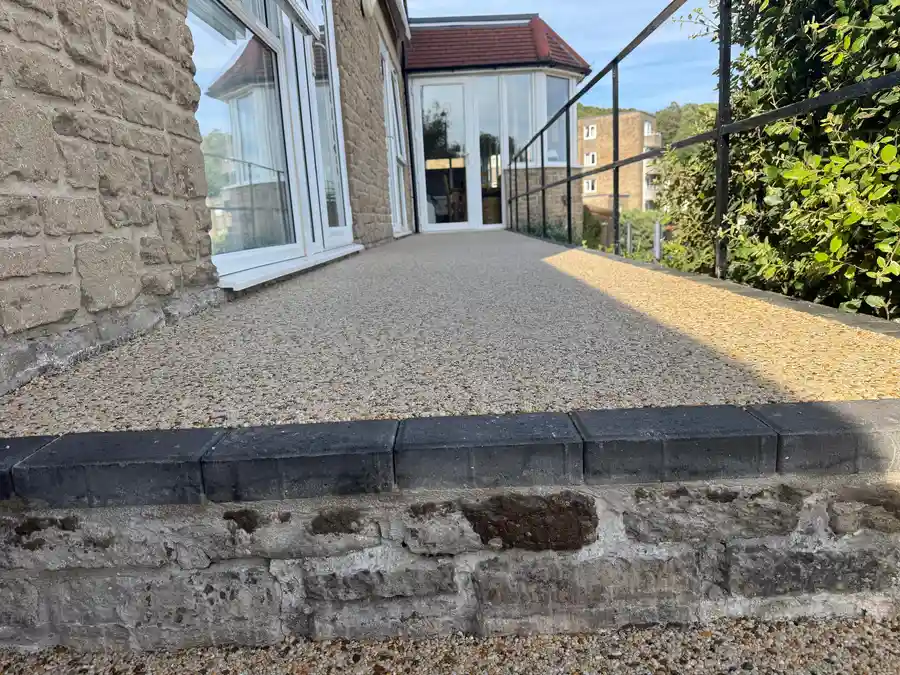
Resin bound surfacing answers all of it. It is smooth and firm with no loose stone to scatter, no joints for weeds to root in, and no individual slabs to rock, lift or crack. The natural stone gives it grip, and because it is permeable it drains rather than holding the water that grows the green algae film you get on flat slab paths. A resin pathway also follows curves, changing widths and irregular shapes that block paving can only manage with a lot of cutting - so a path can sweep naturally around a border or a corner rather than stepping around it in straight lines.
The result is a path that stays looking neat for two decades on almost no maintenance. On the damp, shaded side-returns common in Bournemouth’s older properties, that is a real difference from the slab paths it usually replaces.
Resin On Steps: Grip Where It Matters Most
Steps are where a surface has to earn its keep, because grip and clear edges are a safety matter, not just a look.
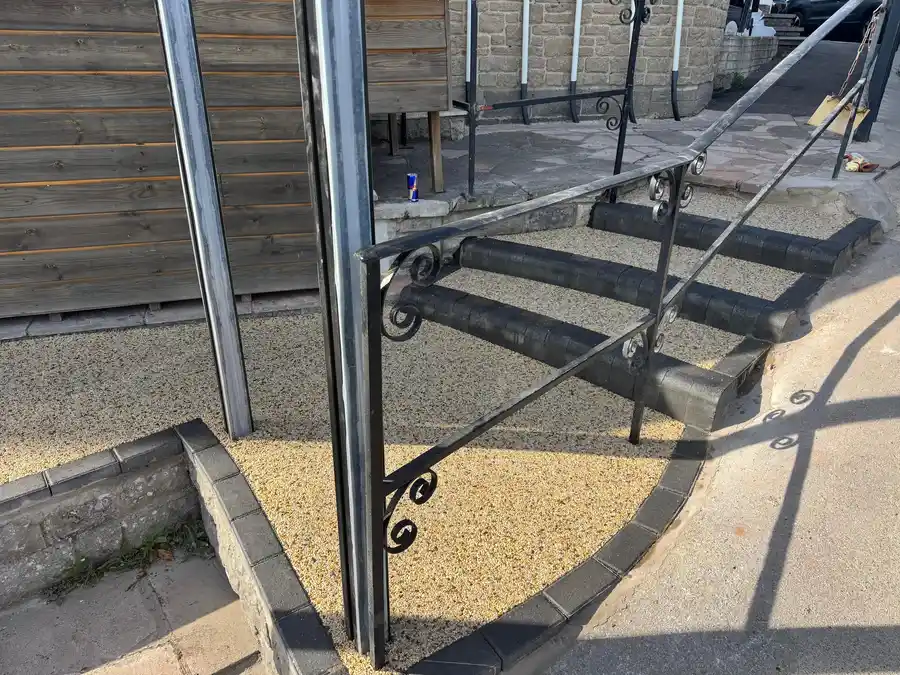
Resin works well on steps because the textured aggregate provides traction, and where a flight is steep or exposed the grip can be increased with a coarser blend or an anti-slip additive. The treads and risers are finished in the same material as the connecting path, so the steps do not look like a separate afterthought - they flow as part of the whole surface.
Defining each step edge clearly is the other half of getting steps right. In this project the steps are picked out with a black block-paving nosing, which gives a crisp visual line on every tread so the edges read clearly underfoot - important on the kind of split-level coastal garden where steps are used constantly. It is a small detail that makes a flight both safer and smarter.
Borders And Edging That Frame The Path
A resin path looks good on its own, but a border lifts it from functional to finished.
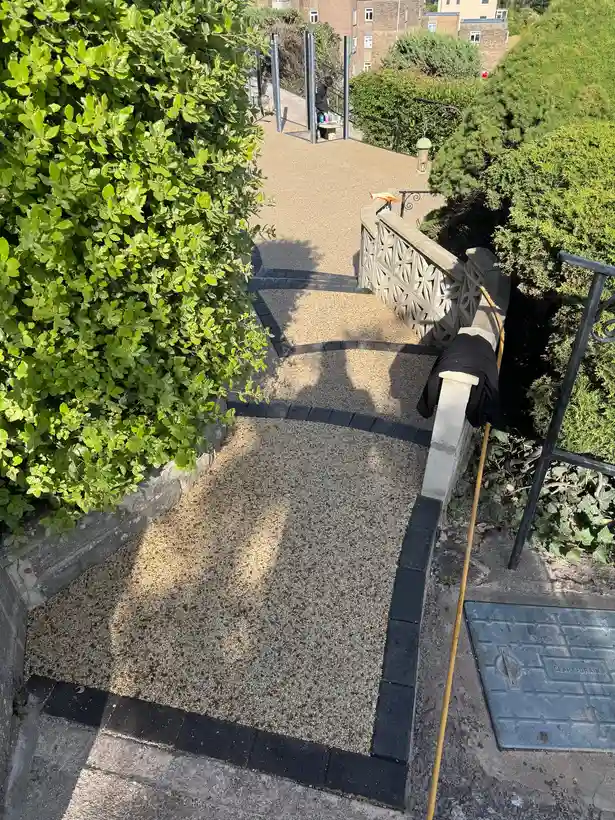
Running a block-paving border along the edges of a path frames it, gives a crisp line against the planting or the lawn, and provides a firm restraint that holds the resin in place. The contrast of a dark charcoal block against a warm buff resin, as in these photos, defines the route of the path and makes the whole thing look deliberate rather than just poured in. Borders also let a path tie into materials already used elsewhere - a brick edge to match the house, or block paving to match a driveway.
On a winding garden path that changes direction and level, that edging does a lot of quiet work, keeping the shape clean as the path curves. It is one of the details that separates a considered job from a basic one.
Connecting Different Levels
Plenty of Bournemouth gardens are not flat, and the paths and steps are what make a sloping or terraced garden usable.
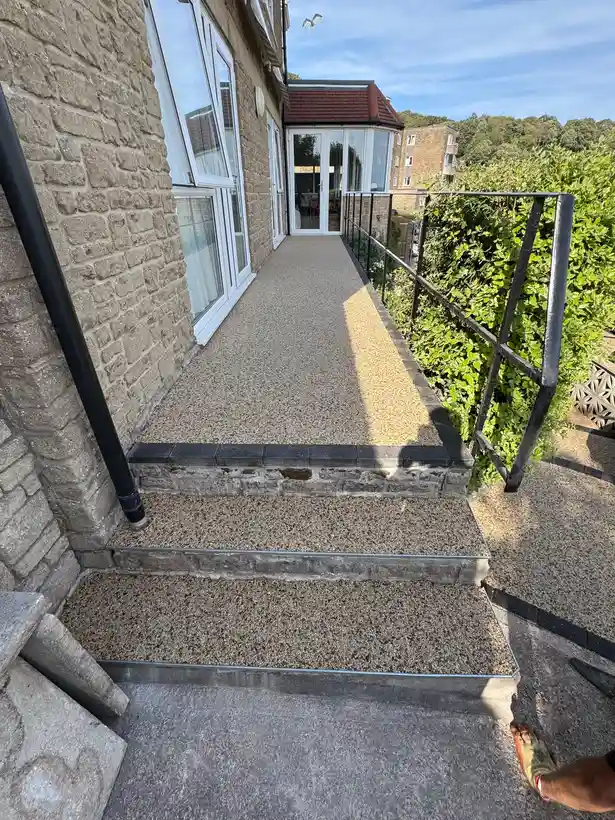
Because resin is the same material on a flat path, a step and a sloped section, it can flow continuously through all of them - up a flight of steps, along a level terrace, down a gentle ramp - without changing surface. That continuity makes a multi-level garden feel joined-up and easy to move through rather than a series of disconnected areas in different materials.
On the terraced and cliffside gardens near the coast, where levels change constantly and retaining walls step the garden down toward a view, this matters. A single surface running through the whole route reads as one considered space, and it is far easier to keep clean and safe than a mix of slab, gravel and concrete steps that each age differently.
One Surface Across The Whole Garden
The strongest thing resin does for a garden is also the simplest: it lets the whole outdoor space share one surface.
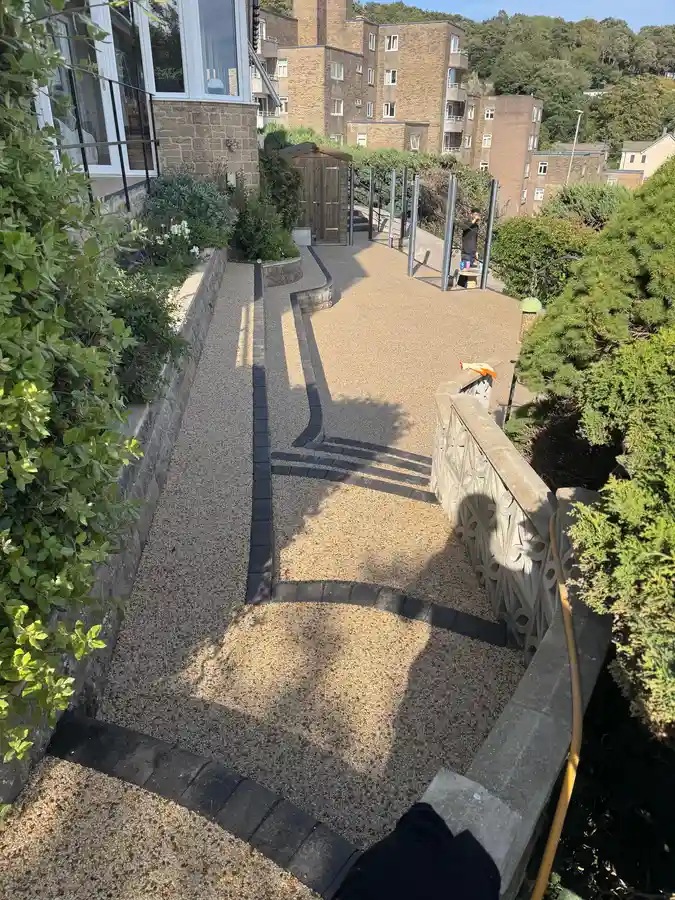
Because resin bound stone is the same material whether it is a driveway, a path, a patio or a set of steps, you can run one aggregate colour right through the property. The buff blend in this project flows from the patio through the pathways and steps, so the garden reads as one continuous space rather than a patchwork of concrete, slabs and gravel that never quite match.
That co-ordination makes a garden feel larger and more thought-through, and it usually works out cheaper than laying several different materials to do the same jobs. It is a popular choice for the family and downsizer homes across the area where the front drive, the side path and the rear patio all get connected into one flowing surface. Our resin patio page covers the rear-garden side of that in more detail.
Getting Paths And Steps Right In A Coastal Garden
Paths and steps look simple, but they involve more detail per square metre than an open driveway - narrow runs, changing levels, edges, drainage and grip all in a small space.
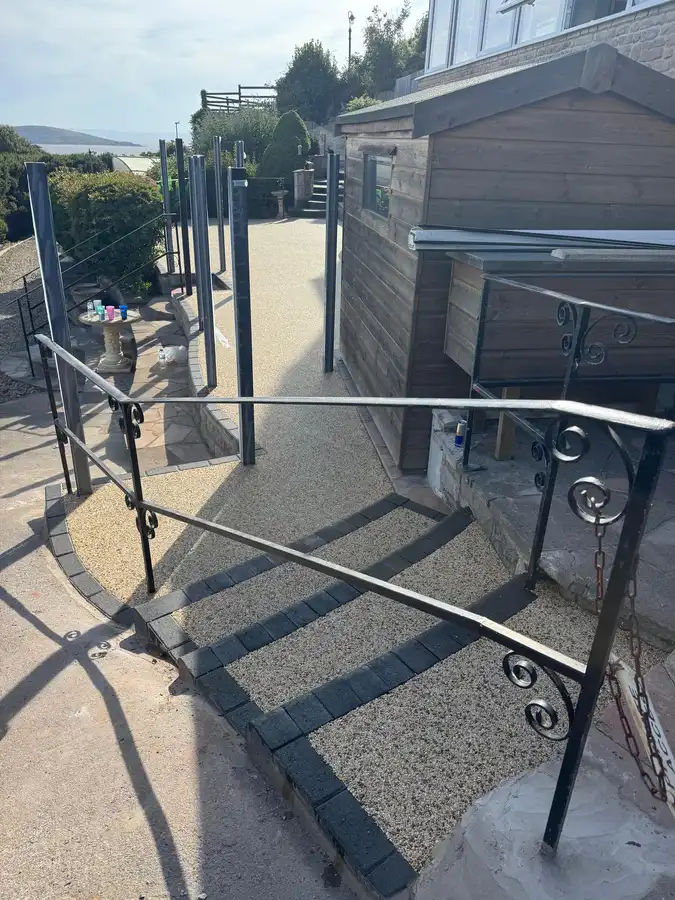
That is why they are worth getting surveyed properly. The levels have to be right so steps are comfortable and water drains away rather than pooling on a tread. The base under a path still needs to be sound and permeable. Grip has to suit the steps and any slopes. And the edging and borders need designing in from the start, not added on. On a coastal garden there is the salt air to account for too, which is why we use UV-stable resin and appropriate edge restraints as standard. Our resin pathway cost guide explains how these factors feed into the price.
If you want to tidy up tired garden paths, replace wobbly steps, or connect a sloping garden with one flowing surface, get in touch for a free site visit and we will talk through the ideas that would suit your garden - sample boards included.
Frequently Asked Questions
Is resin good for garden paths?
Yes. Resin bound surfacing is one of the best materials for a garden path. It is smooth and firm underfoot with no loose stone, no joints for weeds and no slabs to rock or lift, yet the natural stone texture still grips in the wet. It is permeable, so it drains rather than puddling, and it can follow curves and changing widths that block paving struggles with. A resin path stays looking neat for around 20 years with little more than an occasional sweep, which is why it suits both period and modern Bournemouth gardens.
Can you put resin on garden steps?
Yes. Resin can be applied to step treads and risers, giving a co-ordinated finish that flows from a path or patio up or down a flight of steps. The textured natural stone provides grip, which matters on steps, and for extra traction a coarser aggregate or an anti-slip additive can be used. Steps are often finished with a block-paving or contrasting nosing to define each edge clearly. On the split-level and sloped gardens common near the Bournemouth coast, resin steps are a practical way to link different levels.
Are resin paths and steps slippery when wet?
No more than other surfaces, and usually less. The aggregate gives a textured, grippy finish rather than a smooth one, and because resin is permeable it drains rather than holding the film of surface water that makes flat slabs slippery. On steps and slopes, where grip matters most, the aggregate blend can be chosen for extra traction. This makes resin a sensible choice for paths and steps in Bournemouth's damp coastal climate, where surfaces spend a good part of the year wet.
How much does a resin bound pathway cost?
A resin bound pathway is priced per square metre and depends on the width, length, the state of the existing base, and any steps, borders or level changes involved. Because paths are narrow, access and edging make up a larger share of the cost than on a big open area. Steps and block-paving borders add to it. The most reliable figure comes from a site visit. Our resin pathway cost guide covers the pricing in more detail for the Bournemouth area.
Can you match a resin path to a driveway or patio?
Yes, and it is one of resin's biggest advantages. Because resin bound stone is the same material whatever surface it is used for, the same aggregate colour can run from a driveway through a connecting path and on to a patio and steps, tying the whole property together. Many Bournemouth homeowners choose one blend across the garden for a co-ordinated look rather than a patchwork of different materials that never quite match.