
30 June 2026
Resin Driveway Maintenance: What You Actually Need To Do
Resin driveways have a reputation for being low maintenance. That reputation is deserved - but low maintenance is not the same as no maintenance. Doing the right things at the right intervals makes the difference between a surface that looks good at 15 years and one that looks tired at 10.
Everything a resin driveway actually needs takes about two hours a year. Here is what that looks like.
The Annual Maintenance Routine For Resin Driveways
Two cleans a year covers almost everything.
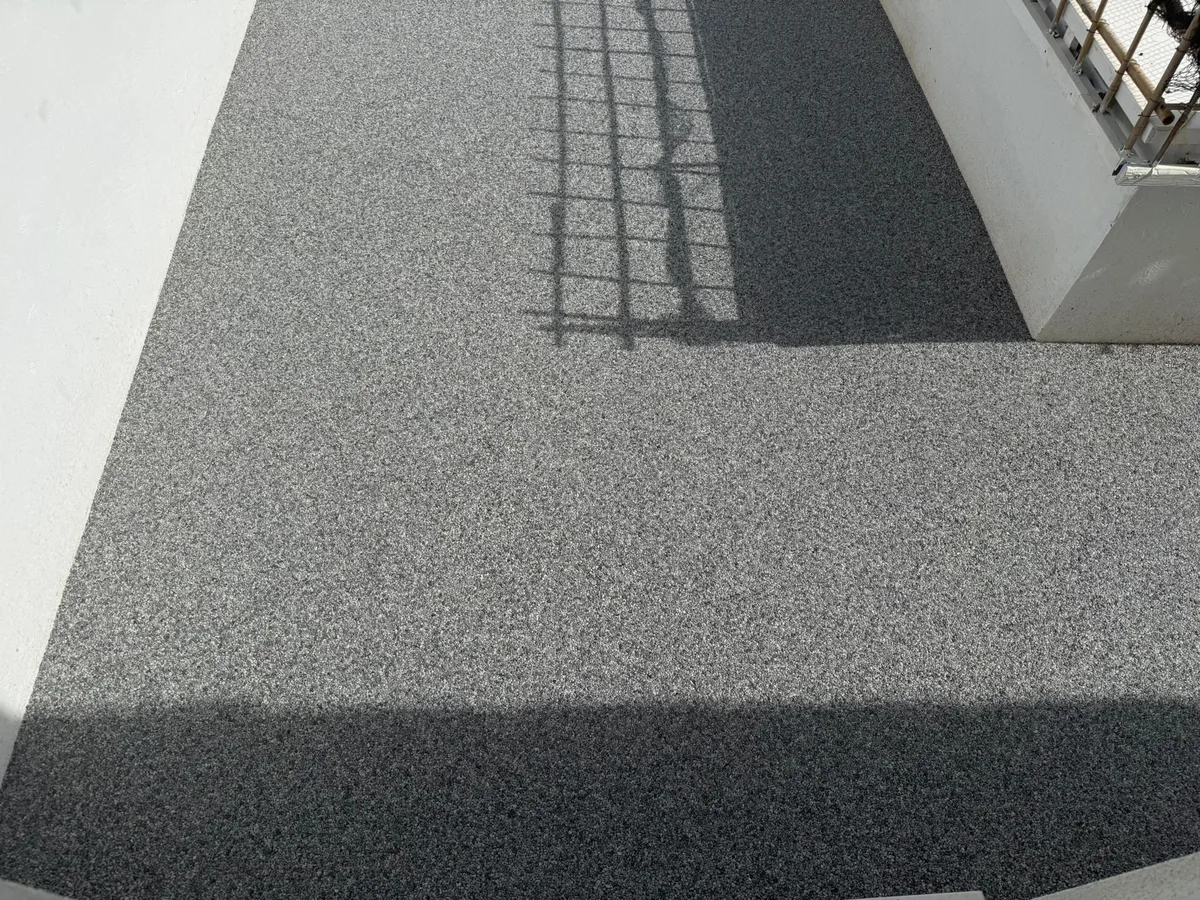
In spring (March to April), the winter months will have deposited grit, road salt from nearby treated roads, and in some cases mild algae on north-facing surfaces that see little sun. A rinse with a garden hose shifts light dirt. For anything more stubborn, a pressure washer on a low setting - under 1,500 PSI - with a wide-angle fan nozzle works well. Keep the nozzle moving and do not dwell on one spot. Add a mild detergent if needed, but rinse it off completely.
In autumn (October to November), the priority is leaves. Leaf tannins stain resin surfaces if wet leaves sit for extended periods. Regular sweeping through October and November is the most effective prevention - it takes ten minutes a week on a tree-heavy plot. A final rinse before winter finishes it off. On properties under deciduous trees, this is the one maintenance task that actually matters if you get it wrong.
That is the full routine for a well-installed resin driveway.
What Damages A Resin Surface
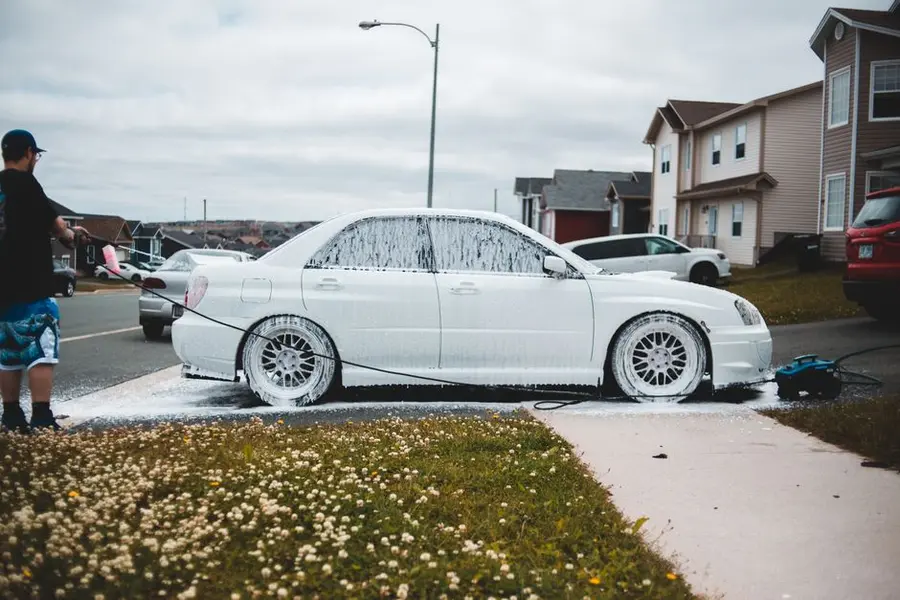
Pressure washing is fine with the right technique. The risk is not a single session but sustained close-range high-pressure washing repeated over many years. A domestic machine used at normal distance causes no problems. A commercial-grade machine at close range used repeatedly over a decade might start to work aggregate loose at the edges. If in doubt, use a garden hose or keep the domestic pressure washer on a medium setting.
De-icing salt is the one to watch. Resin handles mild frost well - the permeable structure lets water drain through rather than freeze in a film on the surface. If ice forms on a sheltered patch, sand is preferable to salt. If you do use salt, rinse the surface when the ice clears. Prolonged salt contact is one of the few things that will affect the resin binder over time.
Diesel, petrol, brake fluid and engine oil can soften the binder if left in contact for weeks or months. A fresh drip from a car is not a problem. A chronic leak left untreated is. Blot, degreaser, scrub, rinse - done while it is fresh.
Avoid pouring paint thinners, acetone or bleach directly on the surface. They can affect the binder and cause permanent discolouration. Use a purpose-made resin cleaner if a stain needs something stronger than detergent.
One thing people do not think about: skip lorries and scaffolding towers. A standard domestic vehicle is no issue. A heavy vehicle or a scaffold tower resting on a small base plate concentrates a lot of weight on a very small area and can cause indentation. If you are having building work done, tell the contractor. Spreading pads are cheap.
Dealing With Specific Stains
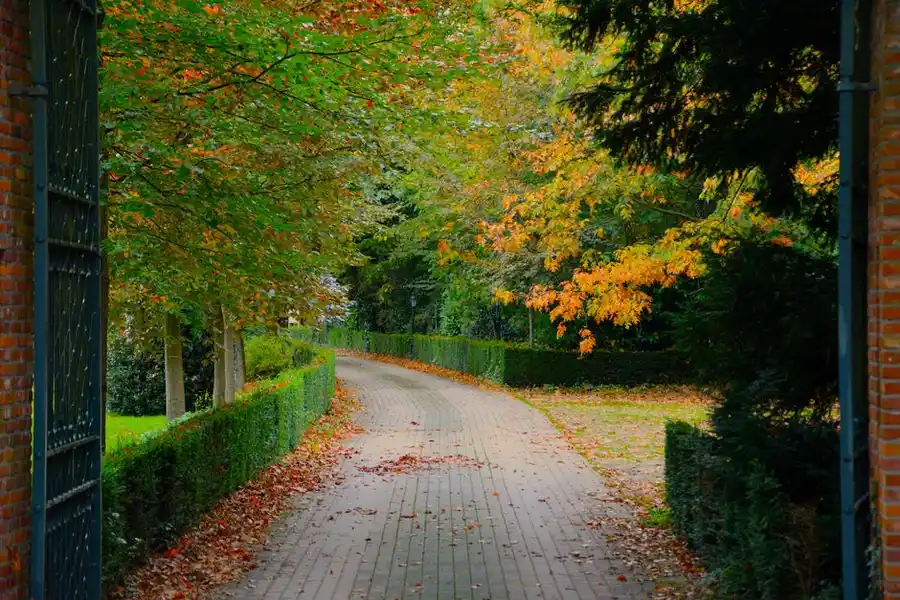
Leaf tannins are best prevented by sweeping regularly in autumn. If staining has already set in, a diluted outdoor cleaner or tannin-removal product scrubbed in and rinsed usually lifts it. Persistent staining needs a specialist resin cleaner.
Oil and grease respond to speed. Blot the oil while still liquid, apply washing-up liquid or a degreaser, scrub with a stiff brush, rinse. Old or dried oil takes more effort but usually responds to a traffic film remover left to dwell before scrubbing.
Rust marks from metal furniture or planters left in the same spot: use an oxalic acid-based rust remover, test on an inconspicuous area first, apply briefly, scrub and rinse. Do not leave acid products sitting on the surface.
Chewing gum: wait until cold (or apply an ice pack), scrape off with a plastic scraper, clean with a solvent wipe. No metal scrapers - they scratch the aggregate.
Paint: fresh emulsion washes off with water if you catch it immediately. Dried emulsion needs a plastic scraper and a warm water soak. Gloss or masonry paint is harder - a paint-safe solvent on a cloth, not poured, may be needed.
Why Resin Needs Less Maintenance Than Block Paving
Block paving owners in the same year as a resin driveway owner are doing substantially more work.

The block paving list includes: re-sanding joints annually or every two years (the kiln-dried sand washes out and weeds fill the gaps), weed treatment at least twice a year, careful pressure washing technique to avoid removing joint sand, occasional block replacement where sections have sunk or cracked, and re-sealing every few years on sealed installations.
Resin has no joints to sand, no weeds, no blocks to relay. Pressure washing at normal settings causes no disruption. No sealing required. Two rinses and a leaf sweep is the year.
Over 15 years, a well-maintained resin surface looks essentially the same as it did at two years. Most block paving shows visible joint deterioration well before that. See our resin vs block paving comparison for a fuller breakdown.
The Sub-Base Matters More Than Anything You Do Afterwards
The sub-base determines long-term maintenance more than any product or routine.
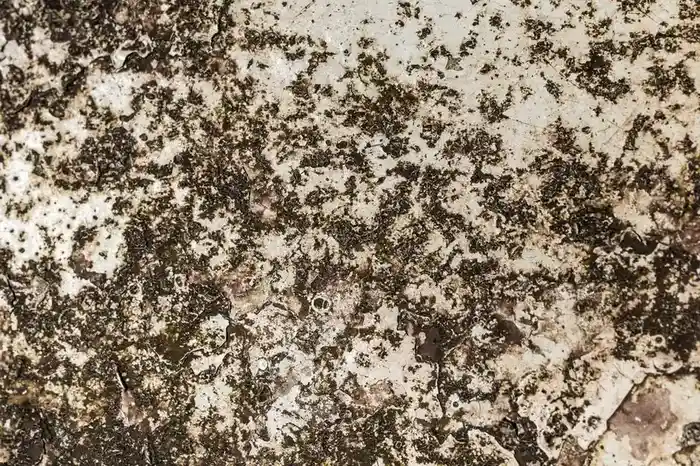
A resin surface on a properly prepared permeable sub-base that drains well and does not shift will stay flat and easy to clean for 20-plus years. A surface on a failing base, on old concrete that has cracked and moved, or on poorly draining ground will develop those problems regardless of what the homeowner does on top of it.
When we get called to look at a resin driveway failing at five or eight years, the cause is almost always the base. The homeowner had no idea because it is invisible until things start going wrong - and by that point it tends to need more than a patch.
The national standards for sustainable drainage systems{target=“_blank” rel=“noopener noreferrer”} set out what a properly constructed permeable base should achieve. An installer who cannot explain their sub-base specification in plain terms is worth questioning before you sign anything.
A Note On Bournemouth Properties Specifically
Bournemouth and Poole get fewer frost events than most of the UK. The freeze-thaw cycle that damages permeable surfaces in colder parts of the country is much less of a factor here. The main weather-related concerns for south coast properties are UV exposure (relevant to the original installation quality rather than ongoing maintenance) and coastal salt air on properties near the seafront.
If your property is within half a mile of the sea - Southbourne, Boscombe, Sandbanks, Canford Cliffs - add a rinse in late spring to clear salt deposits that accumulate over winter and early spring. That is one extra task for coastal properties. Mild winters also mean de-icing is rarely needed here, which removes one of the main risk factors for resin surfaces in more northern areas.
For more on how the south coast climate affects lifespan specifically, see our post on how long a resin driveway lasts.
What To Do If You Notice A Problem
Most issues that develop over time are localised - a small patch of aggregate loss at a drainage channel edge, a crack following the line of old concrete underneath, a patch of discolouration from a long-standing oil drip.
Small repairs are generally straightforward. A reputable installer can patch and blend a small area without disturbing the surrounding surface. The main thing is not to leave problems for two or three seasons - a small repair done promptly stays small.
If you are seeing cracks across a wider area in a pattern that follows the joints of old concrete beneath, that is sub-base movement, not surface failure. Patching the top will not fix it. The base needs attention.
Contact us for a free assessment if you are not sure what you are looking at. We will tell you honestly whether it needs immediate work, monitoring, or nothing at all.
Frequently Asked Questions
How do you clean a resin driveway?
A rinse with a garden hose or light pressure wash (under 1500 PSI) is all that is needed for routine cleaning. Use a wide-angle nozzle and keep the lance at least 30cm from the surface. For stubborn stains, a mild detergent applied with a stiff brush and rinsed thoroughly works well. Avoid jet washing at very close range or high pressure - it will not damage the surface immediately, but sustained high-pressure washing over many years can work aggregate loose from the edges.
How often does a resin driveway need cleaning?
Once or twice a year is enough for most properties. In Bournemouth and on the south coast, the main maintenance events are a spring clean after winter (removing any grit, salt residue, or accumulated algae from shaded areas) and an autumn clear of leaves before they break down and stain. Day-to-day the surface needs nothing beyond sweeping.
Does a resin driveway need sealing?
No. Resin bound surfacing does not need periodic sealing. The aggregate is fully encapsulated in the resin binder at installation - there is no surface coating to wear away. Any installer or company suggesting you need to buy an annual sealant product is either mistaken or selling something unnecessary.
Can oil stains be removed from a resin driveway?
Yes, fresh oil stains can usually be treated successfully. The key is to act quickly - blot up as much oil as possible while it is still liquid, then apply a degreaser or washing-up liquid and scrub with a stiff brush before rinsing. Oil that has been left for days or weeks will have penetrated deeper into the aggregate and may leave a residual discolouration. For severe or old stains, a specialist resin driveway cleaner is worth trying before considering repair.
Will weeds grow through a resin driveway?
No. Resin bound surfacing has no joints - it is a continuous bonded layer. There is nowhere for weeds to take hold and grow through. You may occasionally see airborne seeds germinating on top of the surface if organic debris like leaf mulch accumulates and is not swept away, but this is easily dealt with and very different from the root-splitting weed growth you get through the joints of block paving.