
5 August 2026
Resin Driveways On A Slope: Do They Work On A Sloped Drive?
A sloped driveway puts a lot of people off resin. The worry is understandable: if it is laid wet and trowelled smooth, does it just run to the bottom, and is it going to be slippery on the incline in the wet? Both are fair questions, and the honest answer to both is no - resin works very well on a slope, and often better than the alternatives. The photos in this post are from a recent driveway we completed on a genuinely sloped Bournemouth plot, so you can see exactly how it turns out.
Here is how resin bound surfacing handles a sloped or steep driveway, what changes compared to a flat site, and why it suits the hilly ground you get across so much of Bournemouth and Poole.
Can You Lay Resin On A Sloped Driveway?
Yes, and it is more straightforward than people expect. Resin bound surfacing is trowelled by hand to follow the existing gradient of the ground, so it takes on the slope without steps, ridges or joints.
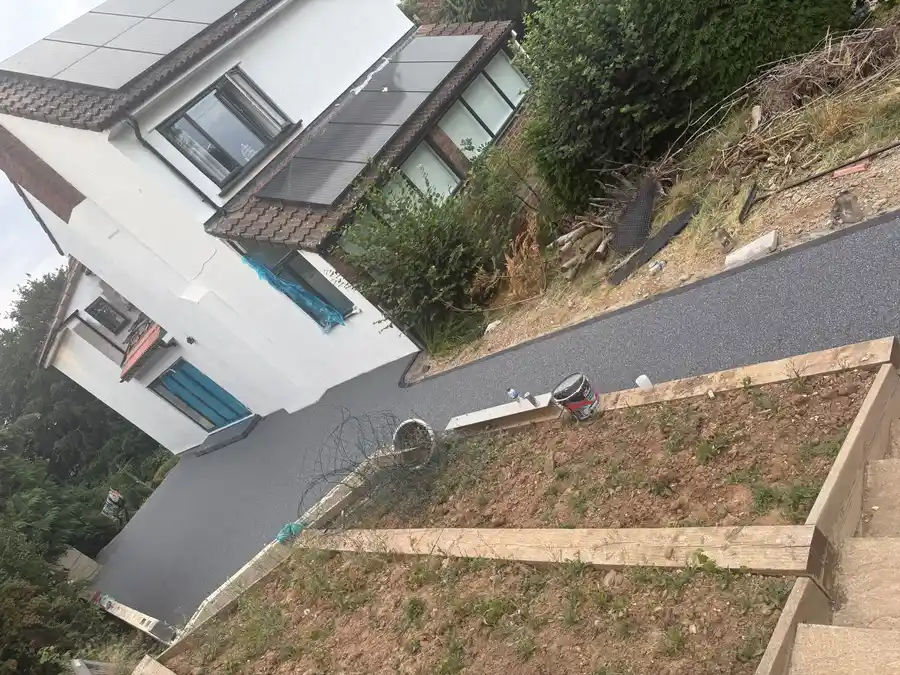
Because it is a bound aggregate rather than loose stone, there is nothing to migrate down the slope - every piece is locked into the resin, so the surface stays exactly where it is laid. That is the key difference from gravel, which is hopeless on any real gradient because it constantly works its way to the bottom. A resin bound driveway on a slope stays put and stays smooth.
The one thing that genuinely changes on a sloped site is what happens underneath and how the water is managed, and we will come to both. But the surface itself takes a gradient in its stride.
How Resin Grips On An Incline
The concern about slipperiness comes from imagining a smooth, wet surface on a hill. Resin is not that.
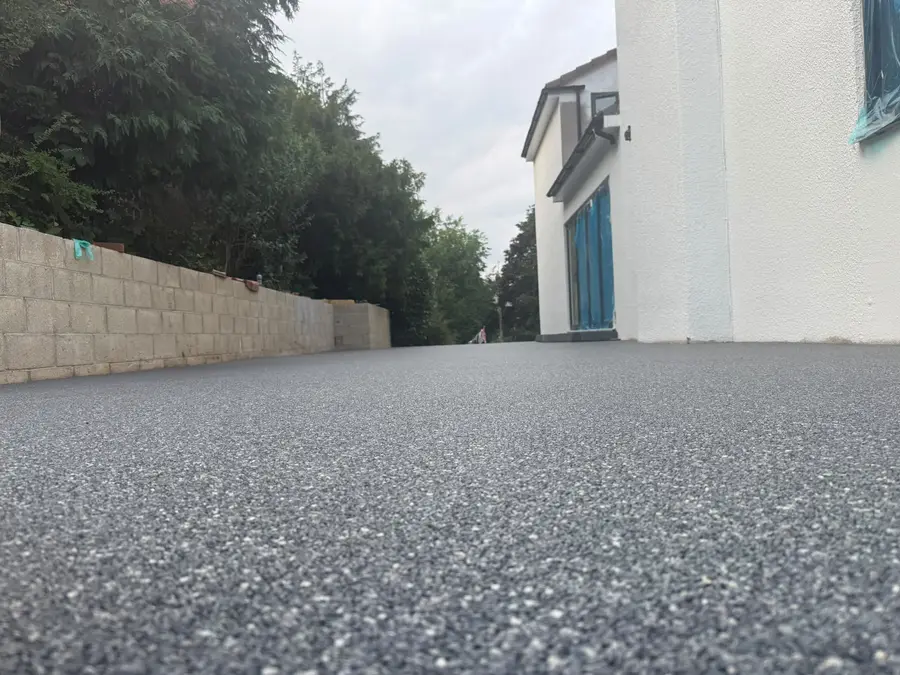
The surface is natural stone aggregate held in a clear resin, and the exposed faces of all that stone create a naturally textured, grippy finish - the opposite of smooth trowelled concrete. That texture goes all the way through the aggregate, so it does not wear smooth over time the way a sealed surface can. On a normal driveway gradient it grips perfectly well underfoot and under tyres.
For a steeper slope or a ramp, the grip can be increased deliberately by choosing a slightly coarser aggregate or adding an anti-slip grit into the mix. It changes the look very little but adds noticeable bite. We cover the grip question in full in our post on whether resin driveways are slippery, but on a slope specifically, the textured, permeable surface is a safer bet than most of the alternatives.
Drainage: A Real Advantage On A Slope
This is where resin quietly wins on a sloped site. On a flat driveway, drainage matters. On a slope, it matters more, because water wants to run downhill and collect at the bottom - against the house, across the pavement, or out onto the road.
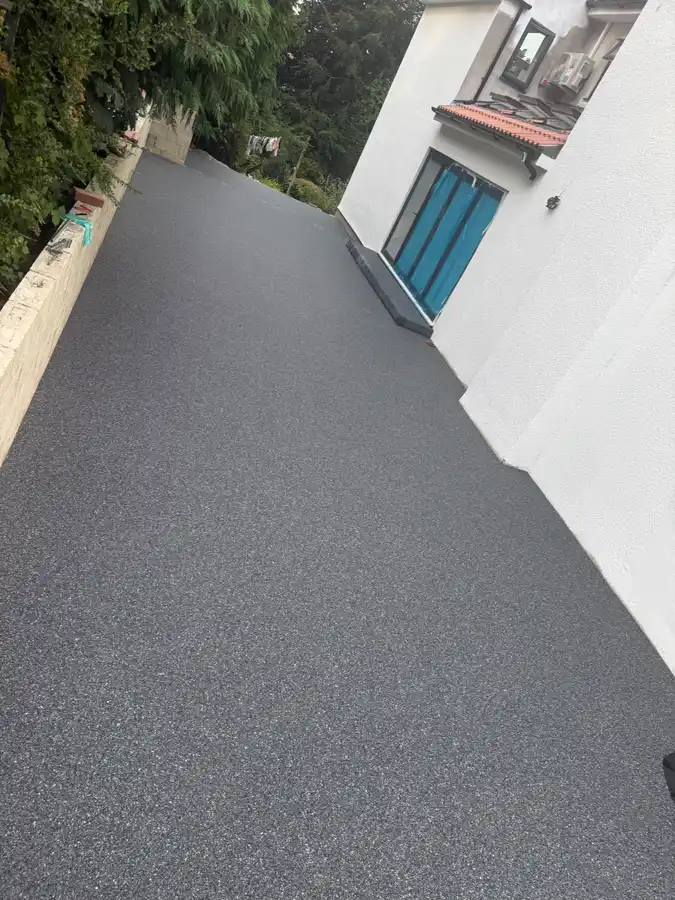
Resin is permeable, so instead of sheeting off down the gradient, rainwater drains down through the surface into the sub-base and away into the ground. That takes the water out of the equation before it can run to the bottom. On the flat coastal plots and the steeper cliffside plots around Bournemouth alike, that permeability is genuinely useful, and it is why resin sidesteps the front-garden planning permission that impermeable surfaces trigger over 5m² under the government’s permeable surfacing guidance{target=“_blank” rel=“noopener noreferrer”}.
On a sloped job we still design falls, channels or a soakaway where needed, so any water the surface cannot take instantly is directed sensibly rather than left to find its own way down. That planning is part of the survey.
The Groundwork Matters More On A Slope
If there is one place not to cut corners on a sloped driveway, it is the sub-base - because gravity is working on it every day.
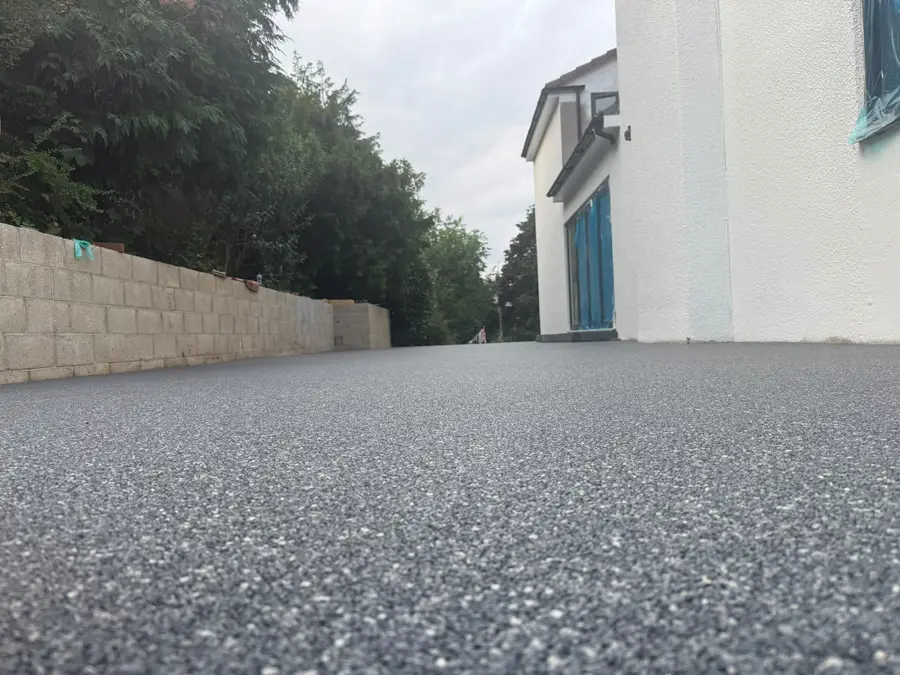
On a flat site, a poorly compacted or shallow sub-base fails slowly. On a slope, it fails faster, because the whole build is under constant downhill load - a weak base is more likely to slump, move or wash out, and the resin surface follows whatever is beneath it. So a sloped driveway needs a properly engineered, well-compacted permeable sub-base of the right depth for the gradient and the ground, with edge restraints that hold the build in place.
This is exactly why a sloped driveway should not be priced to a standard flat-site spec over the phone. Our guide to what goes under a resin driveway explains the sub-base principles, and on a slope every one of them matters more. An experienced installer assesses the gradient and the ground and builds accordingly.
Why Sloped Driveways Are So Common Around Bournemouth
This is not a niche problem locally - a large share of the driveways we survey are on some kind of slope, because of how the area sits.
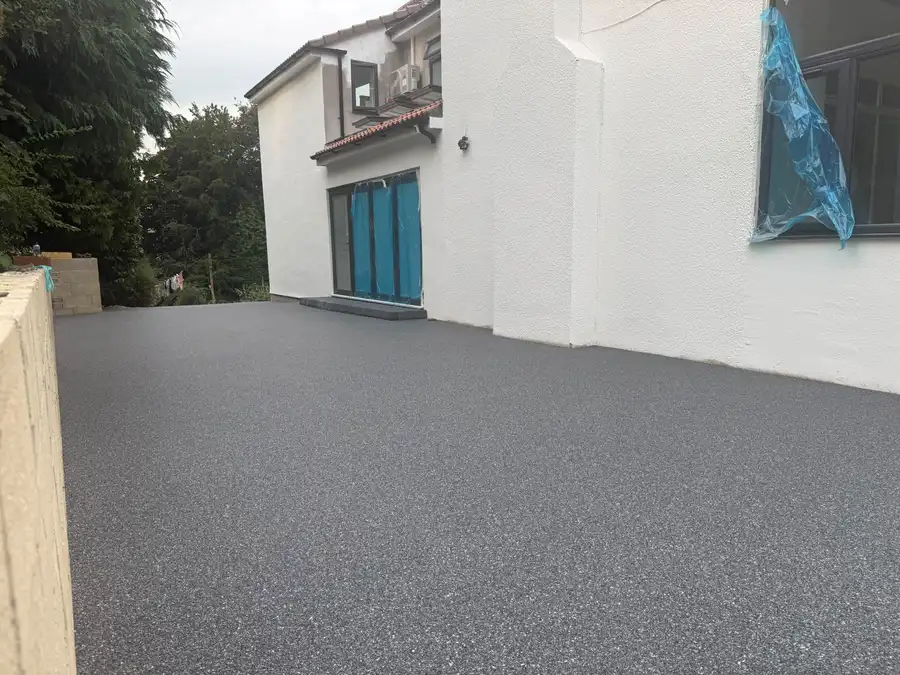
Bournemouth and Poole are cut through with chines and valleys running down to the sea, and much of the housing sits on the slopes between them. The cliffside areas - Alum Chine, Durley, Boscombe overcliff, parts of Southbourne and Canford Cliffs - have plenty of properties on a real gradient, and the older suburbs climbing away from the town centre are far from flat. Add the sandy, free-draining heathland ground across much of the area and the pockets of clay elsewhere, and you have a lot of sloped plots with varied ground beneath them.
That combination is why local experience counts on a sloped driveway. An installer who has built on the sandy slopes of Canford Heath and the clay-influenced ground around the valleys knows how the sub-base needs to change with each, rather than applying one depth everywhere.
Getting A Sloped Resin Driveway Done Right
A sloped driveway is a good candidate for resin, but only if it is built for the slope rather than in spite of it.
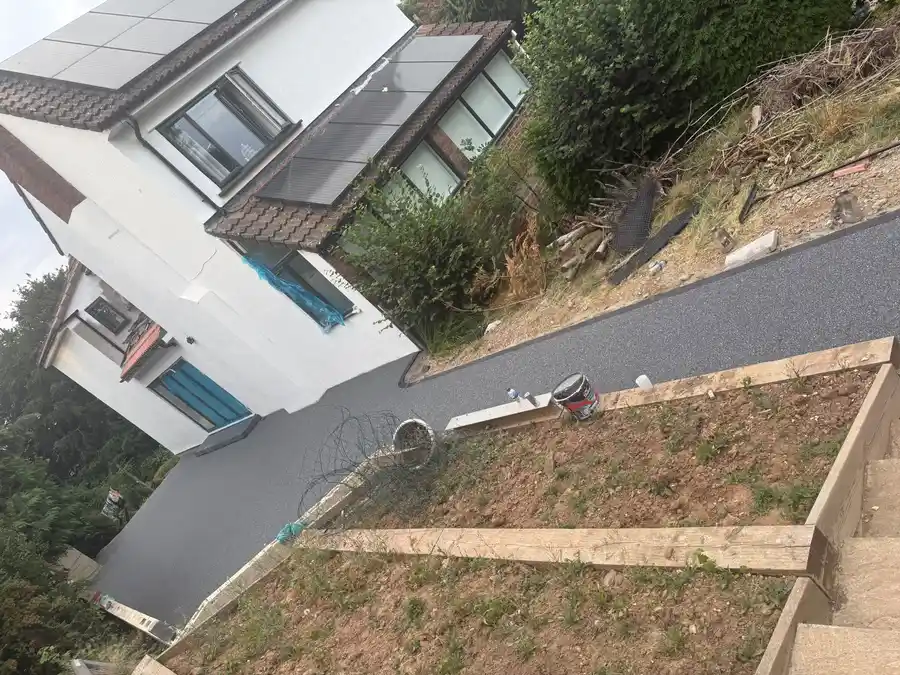
That means a site visit that actually assesses the gradient, the ground and where the water goes - not a number off a chart. It means a sub-base engineered and compacted to stay stable on the slope, grip specified to suit the incline, and drainage designed so water is managed rather than left to run to the bottom. Get those right and a sloped resin driveway lasts as long and looks as good as one on the flat, as the finished job in these photos shows.
If you have a sloped or steep driveway and have been told resin will not work, or you just want an honest assessment of what your gradient needs, book a free site visit and we will tell you exactly how it would be built for your plot.
Frequently Asked Questions
Can you lay a resin driveway on a slope?
Yes. Resin bound surfacing is well suited to sloped and gently-to-moderately steep driveways. It is trowelled to follow the existing gradient, so it takes on the slope of the ground without steps or ridges, and the textured natural stone finish provides grip on the incline. On steeper slopes the aggregate blend can be chosen for extra traction, and drainage is designed into the build so water does not run off down the slope. The main requirement is a properly engineered sub-base that stays stable on the gradient, which is assessed on the site visit.
Is a resin driveway slippery on a slope?
No more than on the flat, and generally less than smooth alternatives. Resin is made of natural stone aggregate, which gives a grippy, textured surface rather than a smooth one, and because it is permeable, water drains through it instead of running down the slope as a slick film. For a notably steep driveway or a ramp, a slightly coarser aggregate or an anti-slip additive increases the grip further. This makes resin a safer choice on an incline than sealed concrete or wet flat slabs.
How steep can a resin driveway be?
Resin handles the gentle-to-moderate slopes found on most residential driveways comfortably. Very steep gradients are possible but need careful assessment - the sub-base has to be built to stay stable, extra grip may be specified, and drainage has to be designed so surface water is managed on the slope rather than running to the bottom. There is no single maximum angle; it depends on the specific site, which is why a steep driveway should always be surveyed in person before a specification is agreed.
Does a sloped resin driveway need special drainage?
Because resin bound surfacing is permeable, water drains down through the surface into the sub-base rather than sheeting off down the slope, which is a real advantage on a gradient. On a sloped site the sub-base and any channels or falls are designed to manage where that water goes, so it does not collect at the bottom or run onto the road. This is planned at survey stage and is one of the reasons the groundwork on a sloped driveway matters more than on a flat one.
Why is the sub-base more important on a sloped driveway?
On a slope, gravity is constantly working on the build, so a poorly compacted or shallow sub-base is more likely to move, slump or wash out over time - and the resin surface will follow it. A correctly engineered, well-compacted permeable sub-base of the right depth keeps the surface stable on the gradient for its full lifespan. This is why a sloped driveway should be assessed and specified by an experienced installer rather than built to a standard flat-site depth.