
8 August 2026
Can You Park A Caravan Or Heavy Vehicle On A Resin Driveway?
Plenty of people around Bournemouth and Poole own a caravan or a motorhome - the coast, the New Forest and the Dorset countryside are all on the doorstep - and a common worry when they are pricing a resin driveway is whether it will actually take the weight. It is a fair question. Resin looks smooth and almost decorative, so it is natural to wonder if a two-tonne caravan is going to sink into it or crack it.
The short version is that resin handles caravans, motorhomes and heavy vehicles perfectly well, but only if the driveway is built for it. Here is what actually matters, and what to tell your installer before the job.
Can You Park A Caravan On A Resin Driveway?
Yes. A resin driveway will take a caravan or motorhome without trouble, as long as it has been built to carry that weight.

The thing to understand is that the resin surface is not what carries the load. The resin bound surface is a wearing layer, laid at around 15-18mm, and it passes the weight straight through to the sub-base underneath. So the question is never really “can resin take a caravan” - it is “is the sub-base built to take a caravan.” Get that right and the surface is fine.
That is the whole job in one sentence, and the rest of this post is really about what “built for it” means. The one thing you must do is tell your installer at the survey that a caravan or motorhome will live on the drive, so it is designed for the load rather than built to a standard car spec and asked to cope afterwards.
It Comes Down To The Sub-Base
If the resin is just the skin, the sub-base is the muscle - and it is where a caravan-ready driveway is won or lost.

For a family car, a permeable sub-base of the usual depth is plenty. For a caravan or motorhome parked regularly, that sub-base is built deeper, compacted harder, and sometimes uses a different build-up to spread the extra load without moving. It has to stay stable under a heavy static weight sitting on it for weeks at a time, not just a car coming and going. Our guide to what goes under a resin driveway explains the layers, and for a caravan every one of them is specified up.
This is exactly why the cheapest quote is a risk if you have a caravan. A driveway built to a standard car depth might look identical on day one and then rut or settle where the caravan sits, because the base under it was never designed for that load. The saving disappears the first summer the jockey wheel presses into a soft base.
Weight: What A Resin Driveway Can Take
Rolling weight is rarely the problem people expect it to be. A correctly built domestic resin driveway comfortably handles cars, caravans, motorhomes and vans.

A typical touring caravan is well within range, and even a large motorhome is fine on a driveway built for it. Occasional heavier one-offs - a delivery lorry pulling in, a skip wagon dropping a skip - a domestic driveway will take in its stride now and then. Where it changes is regular heavy traffic: if a driveway or yard is going to see lorries or commercial vehicles day in, day out, that is a commercial specification with a deeper sub-base, a larger aggregate and a higher-strength resin, not a domestic build.
So for the vast majority of Bournemouth homeowners - a car and a caravan, a motorhome, a big 4x4 and a work van - a properly built domestic resin driveway carries it all. The spec just needs to know what it is carrying.
Point Loads: Jacks, Steadies And Jockey Wheels
Here is the detail that catches people out, because it is not about the total weight at all. It is about how that weight is concentrated.
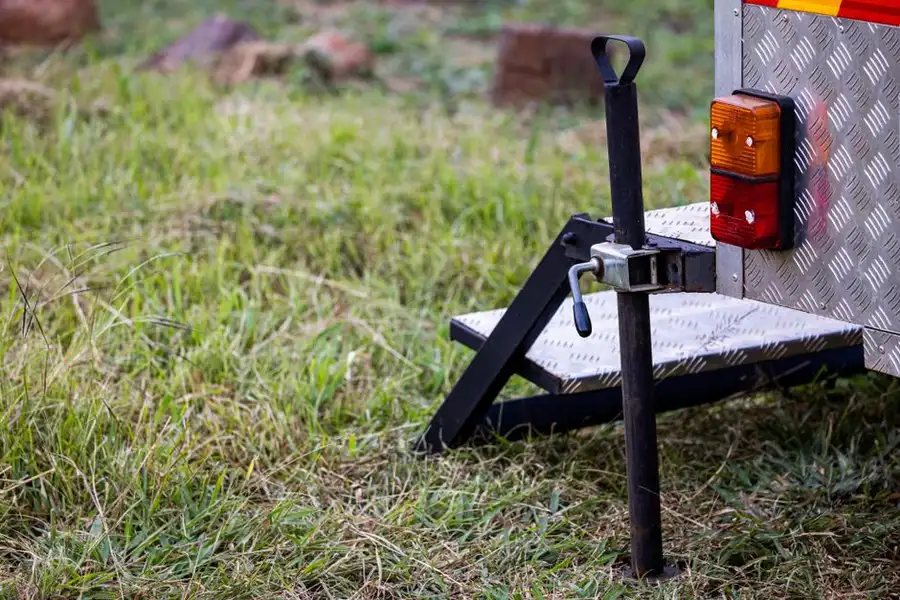
A caravan’s rolling weight is spread across its tyres, which is easy for the surface. But a jockey wheel, corner steadies or a motorhome’s levelling jacks press a large share of that weight through a tiny contact area - and a concentrated point load is far more demanding on any surface than a rolling one. On a warm day, when resin is slightly softer, a metal steady sitting on a single point for a fortnight can leave an indentation.
The fix is simple and cheap: put a load-spreading pad or a solid board under every jack, steady and jockey wheel, so the weight is distributed over a bigger area. Caravanners already do this on block paving and slabs for the same reason, and a set of pads costs a few pounds from any caravan shop. Manage the point loads and the surface stays flat.
Turning, Manoeuvring And Tyre Scuffing
The other thing worth knowing is about movement rather than weight, and it mostly applies in the first few weeks after a new driveway is laid.
Dry-steering - turning the wheel of a heavy vehicle while stationary, especially on a hot day - drags the tyre across the surface and can scuff freshly laid resin before it has fully hardened. A caravan being shunted back and forth to get it onto the drive puts that kind of load right where the manoeuvring happens. It is not a long-term problem; resin hardens with age and the marks generally blend out, but on a brand-new surface in a Bournemouth summer it is worth rolling rather than dry-steering for the first few weeks. Our post on common resin driveway problems covers scuffing in more detail.
Once the surface has cured and hardened, normal manoeuvring is no issue. It is only the combination of a hot day and a very new surface that calls for a little care.
Getting A Driveway Built For A Caravan Or Motorhome
None of this is complicated, but it all depends on one thing: the installer knowing about the caravan before they design the driveway.

At the site visit, say what you will be parking - the type and rough weight of caravan or motorhome, and whether it lives on the drive year-round or comes and goes. From that, the sub-base depth and build-up are specified for the load, the layout is planned so there is room to manoeuvre without dry-steering into a wall, and you get honest advice on load-spreading pads for the steadies. Build it that way and a resin driveway takes a caravan for its full 20-year life without a mark.
If you have a caravan, motorhome or heavy vehicle and want a driveway built to carry it properly, book a free site visit and we will design the sub-base around what you are actually parking on it.
Frequently Asked Questions
Can you park a caravan on a resin driveway?
Yes, provided the driveway is built for it. Resin bound surfacing itself carries the load through to the sub-base beneath, so a caravan, motorhome or heavy vehicle is fine as long as that sub-base is engineered and compacted to the right depth for the weight. The surface is laid at 15-18mm over a permeable sub-base, and for regular caravan or motorhome use that sub-base is specified deeper and stronger than for family cars. The key is telling your installer at the survey stage that a caravan will be parked on it, so the build is designed for the load from the start.
Will a caravan or motorhome damage a resin driveway?
Not if the driveway is built for the weight and the point loads are managed. The main risk is not the rolling weight of the vehicle but concentrated point loads - a caravan jockey wheel, corner steadies or a motorhome jack pressing all the weight through a small area, especially on a hot day when the surface is softer. Spreading those loads with a pad or board prevents indentation. On a correctly built sub-base, the rolling weight of a caravan or motorhome is well within what resin handles.
Can a resin driveway take the weight of a lorry or HGV?
Domestic resin driveways are built for cars, caravans, motorhomes and vans. Occasional heavier vehicles - a delivery lorry, a skip wagon - can cross a domestic driveway, but regular HGV or commercial traffic needs a commercial specification with a deeper, stronger sub-base and often a larger aggregate and higher-strength resin. For anywhere expecting regular heavy vehicles, the driveway or yard should be designed to a commercial standard from the outset rather than to a domestic spec.
Do you need a thicker resin driveway for a caravan?
The resin surface layer stays much the same at around 15-18mm, but the sub-base underneath is built deeper and stronger for a caravan or motorhome. That sub-base is what carries the load, so its depth, material and compaction are increased to suit the extra weight and the point loads from jacks and steadies. This is decided at the site visit based on the vehicle weight and how often it will be parked, which is why it matters to mention it before the quote.
How do you protect a resin driveway from caravan legs and jacks?
Use load-spreading pads or a solid board under jockey wheels, corner steadies and jacks so the weight is distributed over a larger area rather than concentrated on a single point. This is standard practice for caravans and motorhomes on any surface and prevents indentation, particularly in warm weather when resin is slightly softer. On a correctly built driveway the rolling weight is no problem; it is only these concentrated static point loads that need managing, and a cheap pad from any caravan shop does the job.